

Relationships can feel confusing.
You may:
- Panic when someone pulls away
- Feel overwhelmed when someone gets too close
- Repeat the same unhealthy patterns
You start asking yourself:
“Why do I react like this?”
This Attachment Style Test helps you understand your attachment pattern based on established attachment theory research by John Bowlby and Mary Ainsworth.
By the end of this test, you will:
- Know your dominant attachment style
- Understand why you react the way you do
- Learn practical steps to move toward secure attachment
This is not a diagnosis. It is a psychological screening tool for self-awareness.
Many people who take this quiz also explore related assessments such as the Social Anxiety Test, Self-Esteem Inventory Quiz, and Stress Level Test, which can reveal emotional patterns that influence relationships.
Who Is This Attachment Style Test For?
This quiz is for adults who:
- Struggle with jealousy or fear of abandonment
- Avoid emotional closeness
- Feel confused about repeated relationship conflicts
- Want healthier romantic or emotional bonds
- Are exploring therapy or self-growth
If you’re over 18 and currently in — or thinking about — relationships, this test can help.
People who take this quiz often also benefit from exploring other PsyMed tests, such as:
- Social Anxiety Test – for fear of judgment or rejection
- Self-Esteem Inventory Quiz – for confidence in relationships
- Stress Level Test – for emotional overwhelm
- Coping Skills Assessment Test – for how you manage emotional stress
Together, these assessments help paint a clearer picture of emotional and relationship patterns.
Is This Attachment Style Test Accurate?
This test includes 16 research-inspired questions that measure two common attachment patterns: relationship anxiety and emotional avoidance. Your responses help estimate which attachment style may describe your relationship tendencies.
This quiz is based on:
- Adult attachment theory
- Clinical observations in relationship psychology
- Patterns commonly seen in therapy
It reflects four core adult attachment styles:
- Secure
- Anxious (Preoccupied)
- Avoidant (Dismissive)
- Fearful-Avoidant (Disorganized)
These styles are widely studied in psychology and often influence how people form romantic relationships, friendships, and emotional bonds.
If your results suggest deeper emotional difficulties, you may also want to explore PsyMed quizzes such as the Borderline Personality Disorder Test, PTSD Test, or Anxiety Assessment Quiz.
Only a licensed mental health professional can provide a formal diagnosis or structured psychological evaluation.
The Four Attachment Styles in Relationships
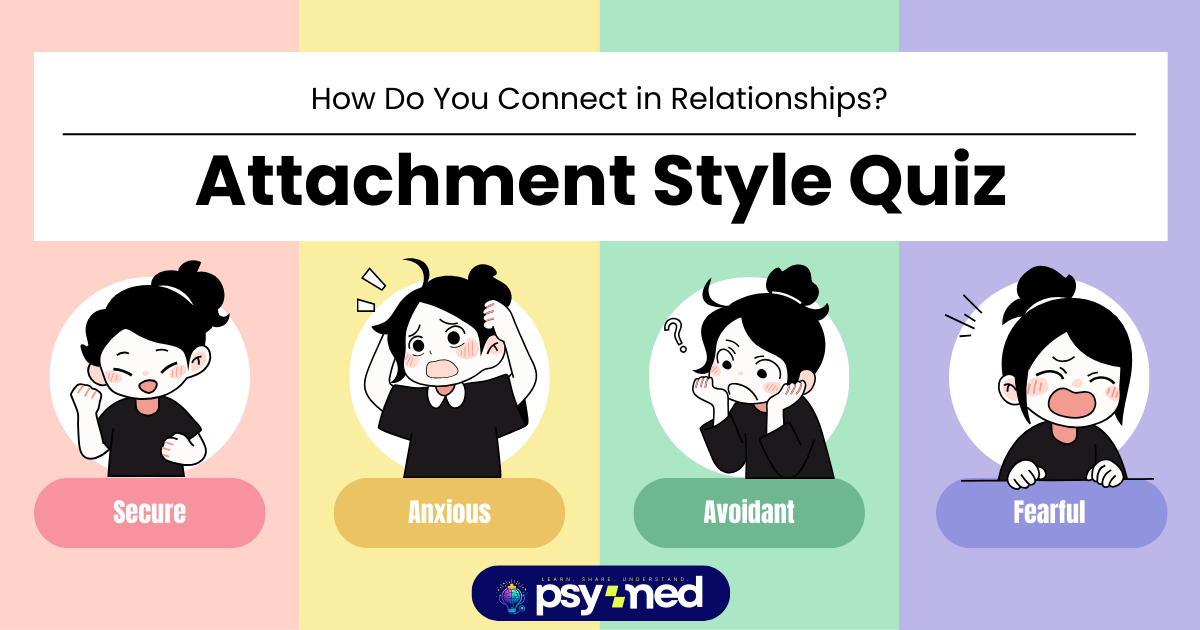
People tend to develop different emotional patterns when forming close relationships. In attachment theory, these patterns are often grouped into four main attachment styles.
Understanding these styles can help explain why you react the way you do in relationships, how you handle closeness, and how you respond to emotional conflict.
Secure Attachment
People with a secure attachment style usually feel comfortable with both closeness and independence. They tend to trust others, communicate openly, and handle relationship challenges in a balanced way.
Anxious Attachment
Anxious attachment often involves a strong desire for closeness combined with a fear of rejection or abandonment. People with this pattern may seek reassurance and feel sensitive to relationship changes.
Avoidant Attachment
Avoidant attachment is often linked to discomfort with emotional closeness. Individuals with this style may value independence strongly and may withdraw during emotional situations.
Fearful-Avoidant Attachment
Fearful-avoidant attachment combines both anxiety and avoidance. Someone with this pattern may want closeness but also fear being hurt, which can create mixed or confusing relationship behaviors.
The Attachment Style Test below is designed to help you identify which of these patterns may best describe your relationship tendencies.
Recommendations
Regardless of your score:
- Study attachment theory to understand emotional patterns
- Reflect on childhood relationship experiences
- Notice emotional triggers without judging yourself
- Practice calm communication and emotional awareness
Many people also find it helpful to explore related PsyMed tests such as the Self-Esteem Inventory Quiz or Coping Skills Assessment Test, which help build emotional resilience.
Secure attachment is built through awareness, emotional safety, and healthier relationship habits.
Let’s Recap
Your attachment style influences:
- How you handle closeness
- How you respond to emotional distance
- How jealousy or insecurity appears
- How you resolve conflict in relationships
Awareness creates choice.
Choice creates change.
Understanding your attachment style is one step toward building healthier relationships.
Frequently Asked Questions
Is this Attachment Style Test a diagnosis?
No. This is a screening tool for educational purposes. It can help you understand emotional patterns, but only a mental health professional can diagnose psychological conditions.
Can attachment styles change?
Yes.
Research shows adults can move toward secure attachment through:
- Therapy
- Self-reflection
- Emotionally healthy relationships
Developing better emotional regulation and communication skills can gradually shift attachment patterns.
Does attachment style only affect romantic relationships?
No.
Attachment styles can influence:
- Friendships
- Family relationships
- Workplace interactions
They shape how people experience trust, closeness, and emotional safety.