
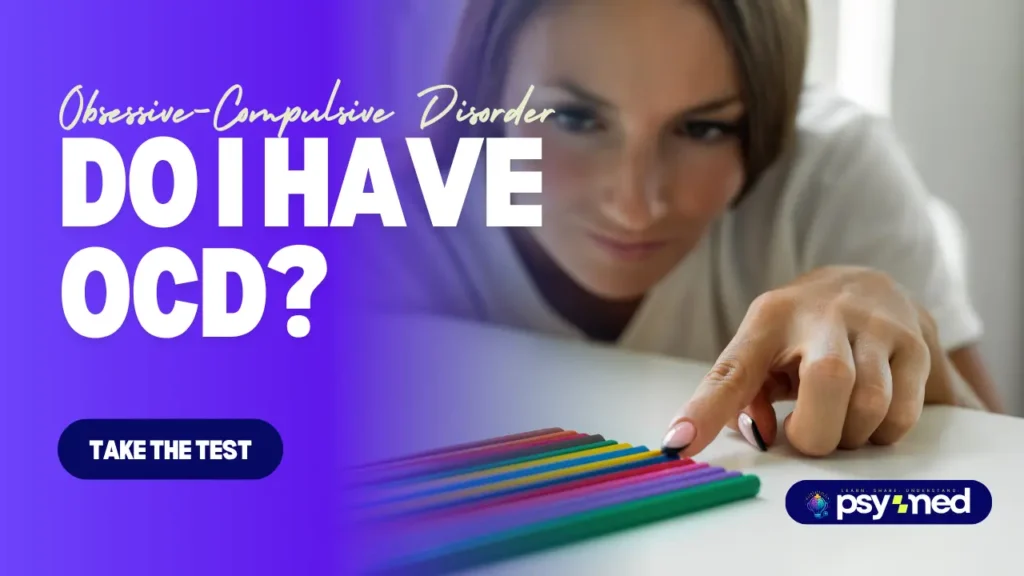
Do I have Obsessive-Compulsive Disorder Test (Free OCD Quiz Online)
Intrusive thoughts you can't stop. Rituals you can't resist. This free Obsessive-Compulsive Disorder Test screens for OCD using Y-BOCS criteria.
Published Updated
The thought arrives without warning. Maybe it’s a fear that you left the door unlocked, even though you checked it twice. Maybe it’s an intrusive image you’d never act on, but can’t seem to clear from your mind. Maybe it’s the need for things to be arranged just right — a pressure so insistent that nothing else gets done until it is. Whatever form it takes, it’s followed by something you feel compelled to do: check, wash, count, arrange, seek reassurance, repeat a word in your head until it feels right.
And then, briefly, the tension releases. Until the next one.
If that cycle sounds familiar, this test was built for you. Not to label you or alarm you — but because people with OCD spend an average of 9 years seeking help before receiving an accurate diagnosis (IOCDF, 2023), and many of them spend those years believing their experience is unique, shameful, or evidence of something worse than it actually is.
This free Obsessive-Compulsive Disorder Test is structured around the Yale-Brown Obsessive Compulsive Scale (Y-BOCS) — the gold standard clinical instrument for measuring OCD symptom severity (Goodman et al., 1989). It covers both obsessions and compulsions across five clinical dimensions: time, interference, distress, resistance, and control. 20 questions. Based on the past 7 days. Results are instant and private.
What Is Obsessive-Compulsive Disorder (OCD)?
Obsessive-Compulsive Disorder is a mental health condition classified in the DSM-5-TR under Obsessive-Compulsive and Related Disorders (300.3 / F42). It is defined by the presence of obsessions, compulsions, or both that are time-consuming (taking more than one hour per day), cause significant distress, or meaningfully interfere with daily functioning.
Obsessions are recurrent, persistent, unwanted, and intrusive thoughts, urges, or images that cause marked anxiety or distress. The person attempts to ignore, suppress, or neutralize them — typically by performing a compulsion. Crucially, obsessions are ego-dystonic: they feel foreign, repugnant, or contrary to the person’s own values. This is what distinguishes the intrusive thought “I might harm my child” from a genuine desire to do so — in OCD, the thought causes extreme distress precisely because it conflicts with who the person is.
Compulsions are repetitive behaviors or mental acts that the person feels driven to perform in response to an obsession, or according to rigid rules. They are intended to reduce distress or prevent a feared outcome, but they are either clearly excessive or not realistically connected to what they’re meant to prevent. Compulsions provide temporary relief — but they reinforce the OCD cycle by teaching the brain that the relief required the ritual. Over time, the rituals must become longer, more precise, or more frequent to achieve the same effect.
OCD affects approximately 2–3% of the global population — an estimated 1 in 40 adults and 1 in 100 children (NIMH, 2023; StatPearls, 2024). It is equally prevalent in men and women, though the onset pattern differs: men more commonly develop OCD in childhood or adolescence, women more commonly in early adulthood. OCD is consistently ranked among the top 10 most disabling conditions worldwide by the World Health Organization.
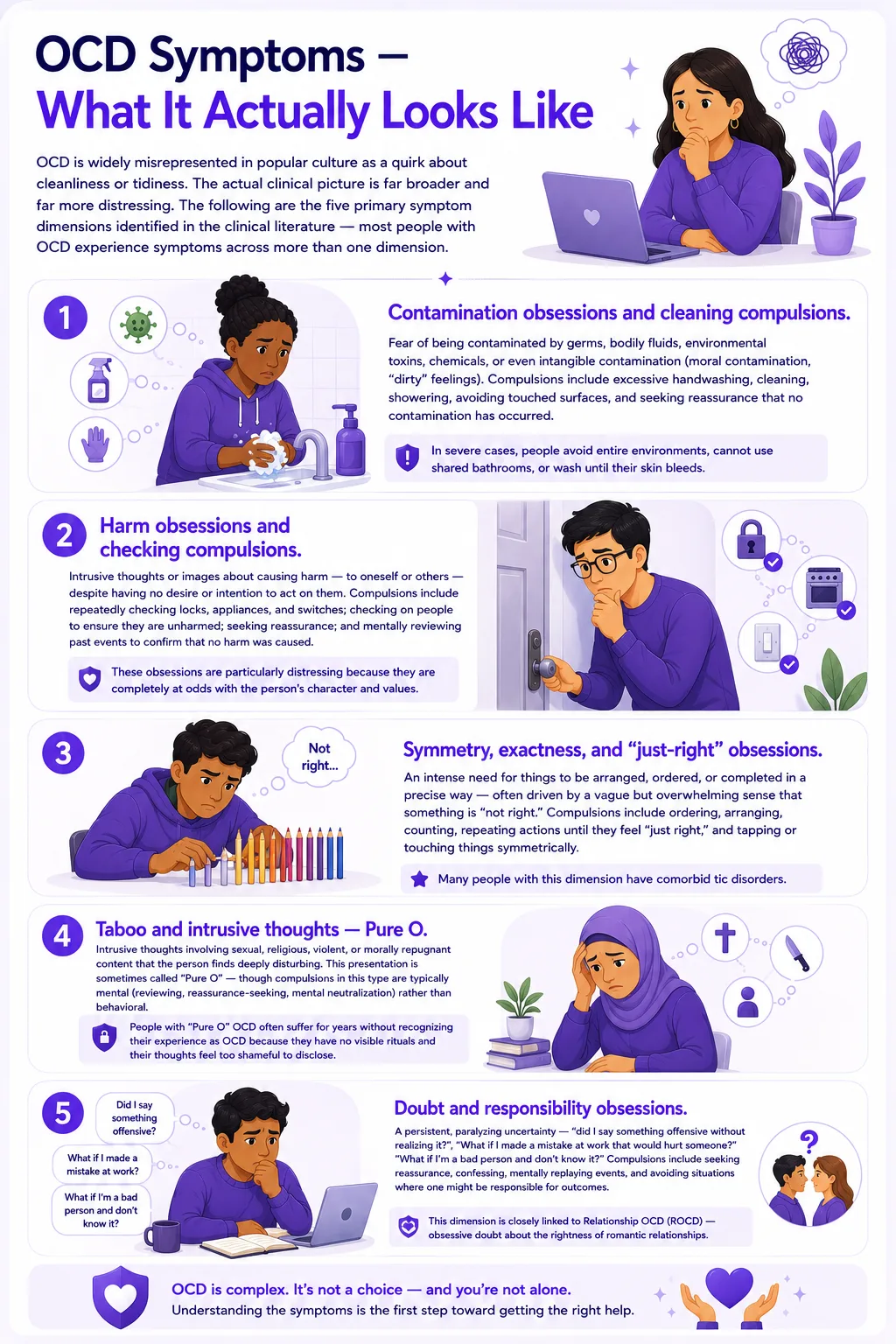
OCD Symptoms — What It Actually Looks Like
OCD is widely misrepresented in popular culture as a quirk about cleanliness or tidiness. The actual clinical picture is far broader and far more distressing. The following are the five primary symptom dimensions identified in the clinical literature — most people with OCD experience symptoms across more than one dimension.
Contamination obsessions and cleaning compulsions. Fear of being contaminated by germs, bodily fluids, environmental toxins, chemicals, or even intangible contamination (moral contamination, “dirty” feelings). Compulsions include excessive handwashing, cleaning, showering, avoiding touched surfaces, and seeking reassurance that no contamination has occurred. In severe cases, people avoid entire environments, cannot use shared bathrooms, or wash until their skin bleeds.
Harm obsessions and checking compulsions. Intrusive thoughts or images about causing harm — to oneself or others — despite having no desire or intention to act on them. Compulsions include repeatedly checking locks, appliances, and switches; checking on people to ensure they are unharmed; seeking reassurance; and mentally reviewing past events to confirm that no harm was caused. These obsessions are particularly distressing because they are completely at odds with the person’s character and values.
Symmetry, exactness, and “just-right” obsessions. An intense need for things to be arranged, ordered, or completed in a precise way — often driven by a vague but overwhelming sense that something is “not right.” Compulsions include ordering, arranging, counting, repeating actions until they feel “just right,” and tapping or touching things symmetrically. Many people with this dimension have comorbid tic disorders.
Taboo and intrusive thoughts — Pure O. Intrusive thoughts involving sexual, religious, violent, or morally repugnant content that the person finds deeply disturbing. This presentation is sometimes called “Pure O” — though compulsions in this type are typically mental (reviewing, reassurance-seeking, mental neutralization) rather than behavioral. People with “Pure O” OCD often suffer for years without recognizing their experience as OCD because they have no visible rituals and their thoughts feel too shameful to disclose.
Doubt and responsibility obsessions. A persistent, paralyzing uncertainty — “did I say something offensive without realizing it?”, “What if I made a mistake at work that would hurt someone?” “What if I’m a bad person and don’t know it?” Compulsions include seeking reassurance, confessing, mentally replaying events, and avoiding situations where one might be responsible for outcomes. This dimension is closely linked to Relationship OCD (ROCD) — obsessive doubt about the rightness of romantic relationships.
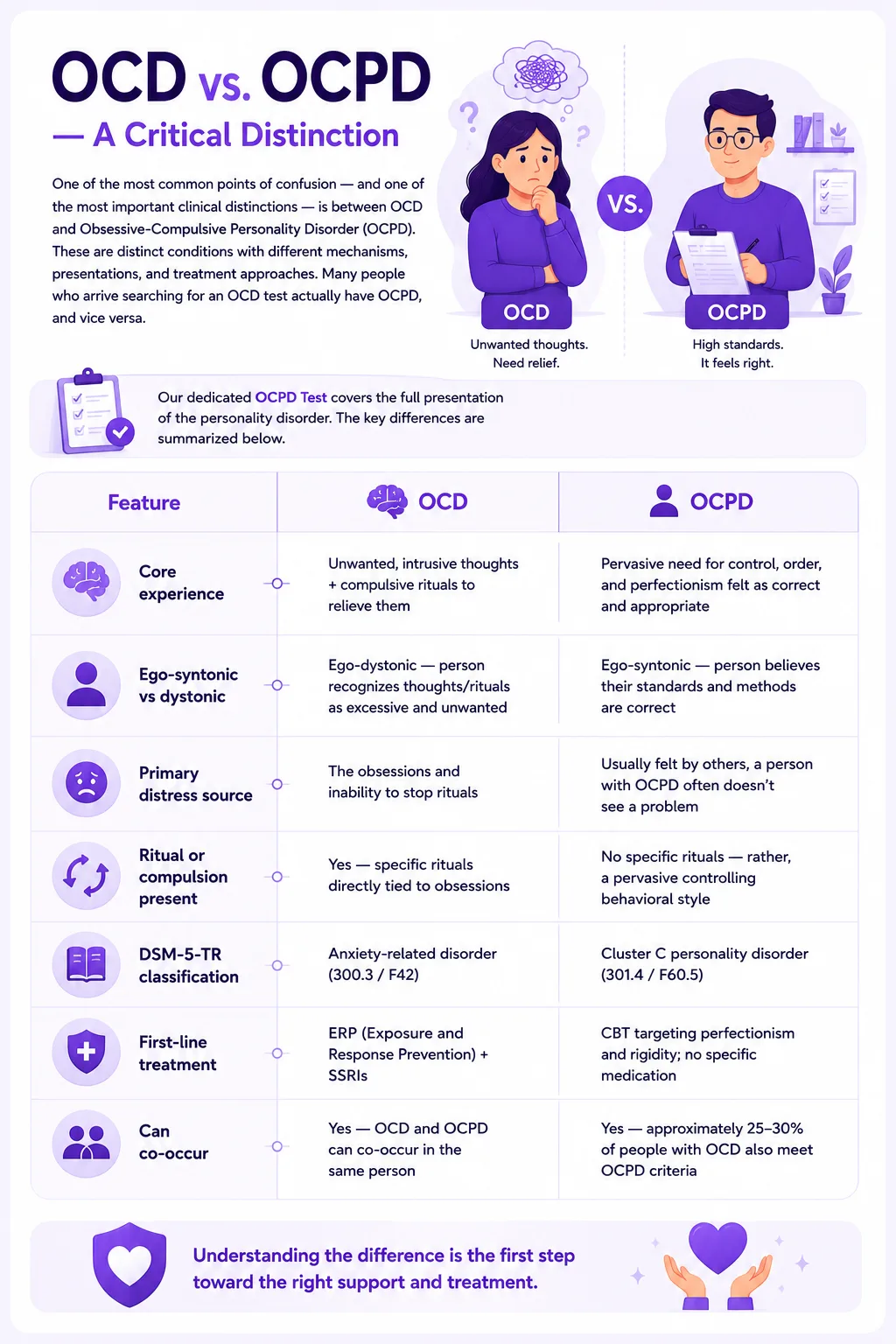
OCD vs. OCPD — A Critical Distinction
One of the most common points of confusion — and one of the most important clinical distinctions — is between OCD and Obsessive-Compulsive Personality Disorder (OCPD). These are distinct conditions with different mechanisms, presentations, and treatment approaches. Many people who arrive searching for an OCD test actually have OCPD, and vice versa.
Our dedicated OCPD Test covers the full presentation of the personality disorder. The key differences are summarized below.
| Feature | OCD | OCPD |
|---|---|---|
| Core experience | Unwanted, intrusive thoughts + compulsive rituals to relieve them | Pervasive need for control, order, and perfectionism felt as correct and appropriate |
| Ego-syntonic vs dystonic | Ego-dystonic — person recognizes thoughts/rituals as excessive and unwanted | Ego-syntonic — person believes their standards and methods are correct |
| Primary distress source | The obsessions and inability to stop rituals | Usually felt by others, a person with OCPD often doesn’t see a problem |
| Ritual or compulsion present | Yes — specific rituals directly tied to obsessions | No specific rituals — rather, a pervasive controlling behavioral style |
| DSM-5-TR classification | Anxiety-related disorder (300.3 / F42) | Cluster C personality disorder (301.4 / F60.5) |
| First-line treatment | ERP (Exposure and Response Prevention) + SSRIs | CBT targeting perfectionism and rigidity; no specific medication |
| Can co-occur | Yes — OCD and OCPD can co-occur in the same person | Yes — approximately 25–30% of people with OCD also meet OCPD criteria |
What Causes OCD?
OCD does not have a single cause. Current research points to an interaction of neurobiological, genetic, and cognitive factors that together create and maintain the obsessive-compulsive cycle.
Neurobiological mechanisms
The most consistently implicated brain circuit involves the orbitofrontal cortex (OFC), the thalamus, and the basal ganglia — a loop that, in OCD, becomes hyperactive, generating persistent threat signals that aren’t properly extinguished. Neuroimaging studies consistently show elevated metabolic activity in the OFC in people with OCD, which decreases following effective treatment (both ERP and SSRIs). Serotonin system dysregulation is the best-established neurochemical finding, explaining why SSRIs are the most effective medications for OCD.
Genetic factors.
OCD has a significant genetic component. First-degree relatives of people with OCD have approximately a 4-fold increased risk compared to the general population (Pauls, 2010). The genetic contribution is higher when OCD onset is in childhood. Twin studies suggest heritability of approximately 40–65%.
Cognitive factors.
Several cognitive patterns are consistently associated with OCD: inflated sense of personal responsibility (believing one must prevent all possible harm), intolerance of uncertainty, overestimation of threat, perfectionism, and the belief that having a thought is equivalent to acting on it (thought-action fusion). These patterns interact with intrusive thoughts — which are universal — to create the OCD cycle in susceptible individuals.
Life events and stress.
OCD frequently emerges or worsens during periods of high stress: major life transitions, trauma, pregnancy and postpartum, bereavement, or significant change. The postpartum period is a particularly high-risk time for OCD onset, particularly harm-themed intrusive thoughts about the baby.
How This Obsessive-Compulsive Disorder Test Works
This test is structured around the Yale-Brown Obsessive Compulsive Scale (Y-BOCS) framework — the gold-standard clinical instrument for measuring OCD severity (Goodman et al., 1989; PMC, 2016). It assesses both obsessions and compulsions across five clinical dimensions: time/frequency, interference with functioning, level of distress, ability to resist, and degree of control.
The test has two parts, each with 10 questions: Part 1 covers your obsessions (intrusive thoughts, images, or urges). Part 2 covers your compulsions (repetitive behaviors or mental rituals). Each question uses a 0–4 scale consistent with the Y-BOCS scoring format. Total score range: 0–40.
Answer based on the past 7 days. Answer honestly — these results are private, and the only person they serve is you.
Understanding Your OCD Test Score
| Score Range | Category | What It Suggests |
|---|---|---|
| 0 – 7 | Subclinical — Minimal or No OCD Symptoms | Responses suggest minimal or no clinically significant OCD symptoms. Intrusive thoughts occur in most people and don’t constitute OCD at this level. |
| 8 – 15 | Mild OCD Symptoms | Mild obsessive-compulsive patterns are present. Symptoms may be manageable, but are causing some distress or interference. Professional evaluation is recommended. |
| 16 – 23 | Moderate OCD Symptoms | Moderate OCD symptoms are present across the obsession and compulsion dimensions. Symptoms are likely interfering meaningfully with daily functioning. Clinical evaluation is strongly recommended. |
| 24 – 31 | Severe OCD Symptoms | Severe OCD symptoms are indicated across multiple dimensions. Significant impairment is likely. Please seek professional help as soon as possible — effective treatment is available. |
| 32 – 40 | Extreme OCD Symptoms | Extreme OCD symptom severity is indicated. This level typically reflects very significant functional impairment. Please seek urgent professional support — you do not have to live this way. |
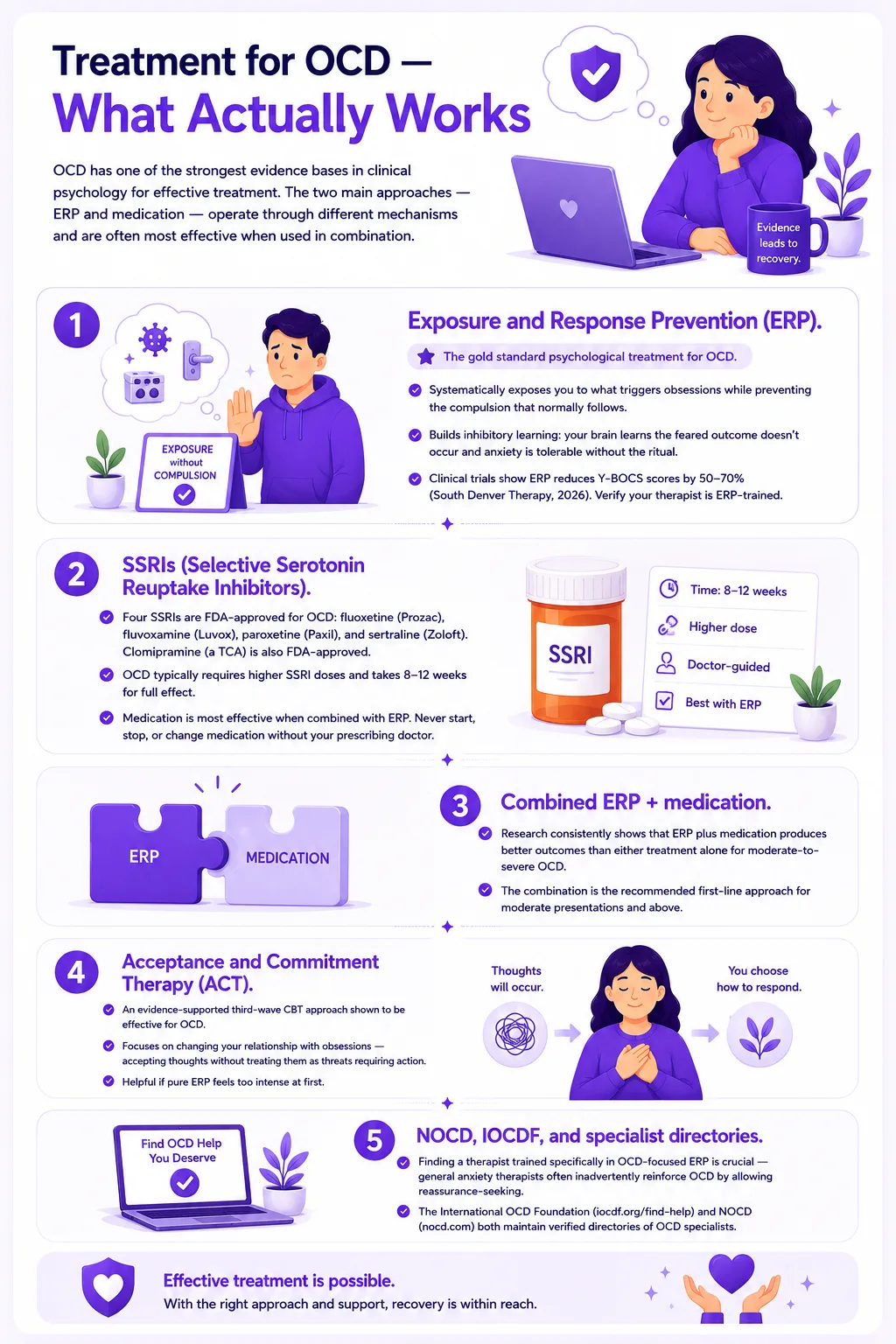
Treatment for OCD — What Actually Works
OCD has one of the strongest evidence bases in clinical psychology for effective treatment. The two main approaches — ERP and medication — operate through different mechanisms and are often most effective when used in combination.
Exposure and Response Prevention (ERP). The gold standard psychological treatment for OCD. ERP works by systematically exposing the person to the thoughts, images, or situations that trigger obsessions — while preventing the compulsion that would normally follow. This sounds straightforward, but it requires skill, structure, and professional guidance to do correctly. The mechanism is inhibitory learning: by staying in the feared situation without performing the ritual, the person’s brain learns that the feared outcome doesn’t occur and that the anxiety is tolerable without the compulsion. Clinical trials consistently show ERP reduces Y-BOCS scores by 50–70% (South Denver Therapy, 2026). Not all therapists who say they treat OCD are trained in ERP — it’s important to verify this when seeking help.
SSRIs (Selective Serotonin Reuptake Inhibitors). Four SSRIs have FDA approval specifically for OCD: fluoxetine (Prozac), fluvoxamine (Luvox), paroxetine (Paxil), and sertraline (Zoloft). Clomipramine, a tricyclic antidepressant, is also FDA-approved and sometimes used for treatment-resistant OCD. OCD typically requires higher SSRI doses than depression and takes 8–12 weeks for full effect, longer than most other conditions. Medication is most effective when combined with ERP. Never start, stop, or change medication without your prescribing doctor.
Combined ERP + medication. Research consistently shows that ERP plus medication produces better outcomes than either treatment alone for moderate-to-severe OCD. The combination is the recommended first-line approach for moderate presentations and above.
Acceptance and Commitment Therapy (ACT). ACT is an evidence-supported third-wave CBT approach that has shown efficacy for OCD — particularly for people who find pure ERP intolerable at first. Rather than reducing the frequency of obsessions, ACT focuses on changing the relationship to them: accepting that thoughts will occur without treating them as meaningful threats requiring action.
NOCD, IOCDF, and specialist directories. Finding a therapist trained specifically in OCD-focused ERP is crucial — general anxiety therapists often inadvertently reinforce OCD by allowing reassurance-seeking. The International OCD Foundation (iocdf.org/find-help) and NOCD (nocd.com) both maintain verified directories of OCD specialists.
Frequently Asked Questions
What is OCD?
Obsessive-Compulsive Disorder (OCD) is a mental health condition (DSM-5-TR 300.3 / F42) characterized by recurrent, unwanted intrusive thoughts (obsessions) and repetitive behaviors or mental acts (compulsions) performed to reduce the distress those thoughts cause. To meet diagnostic criteria, symptoms must consume more than one hour per day or cause significant distress or functional impairment, and must not be better explained by another condition. OCD affects approximately 2–3% of the global population and is equally prevalent across genders.
What are the signs of OCD?
The core signs of OCD are the obsession-compulsion cycle: an intrusive, distressing thought, image, or urge that the person cannot dismiss, followed by a behavior or mental ritual performed to reduce the distress. Common obsession themes include contamination, harm, symmetry, taboo thoughts, and doubt. Common compulsions include washing, checking, counting, ordering, seeking reassurance, and mental reviewing. OCD symptoms must cause significant time consumption, distress, or functional interference to constitute the disorder.
What is the difference between OCD and “just being neat”?
This is one of the most important distinctions in OCD education. Most people who say “I’m so OCD about my desk” prefer tidiness — not OCD. Actual OCD involves ego-dystonic intrusive thoughts that cause significant anxiety, followed by compulsions that the person feels unable to resist. The person with OCD experiences their symptoms as distressing and uncontrollable — not as a charming personality trait. The key markers are: unwanted intrusive thoughts, significant distress, meaningful time consumption (one hour or more per day), and impairment in daily functioning.
Can you have OCD without visible rituals?
Yes — this is sometimes called “Pure O” OCD, though the name is slightly misleading because compulsions are usually present but mental rather than behavioral. Pure O typically involves intrusive thoughts (often taboo: harm, sexual, religious) with no visible rituals, but with significant mental compulsions: seeking reassurance, mentally reviewing past events, thought suppression, and neutralizing thoughts. Pure O is significantly underdiagnosed because people don’t recognize their mental rituals as compulsions and often feel too ashamed to disclose the content of their intrusive thoughts.
How is OCD different from OCD-related conditions like body dysmorphic disorder or health anxiety?
OCD and several related disorders share the obsession-compulsion loop but differ in the focus of the obsession. Body Dysmorphic Disorder (BDD) involves obsessive preoccupation with perceived physical flaws. Health anxiety (illness anxiety disorder) involves obsessive fear of having a serious illness. Hoarding disorder involves obsessive difficulty discarding possessions. All are classified in the DSM-5-TR’s OCD and Related Disorders chapter and share neurobiological and treatment features with OCD. Our Anxiety Test covers health anxiety specifically.
Is OCD treatable?
Yes — OCD is one of the most effectively treated mental health conditions. ERP (Exposure and Response Prevention) reduces Y-BOCS symptom scores by 50–70% in most patients who complete treatment. SSRIs (particularly at higher doses used specifically for OCD) provide additional benefit, especially when combined with ERP. The main barrier to treatment is not efficacy — it’s access and accurate diagnosis, which is why people with OCD wait an average of 9 years before receiving correct treatment. If you score significantly on this test, please don’t wait 9 years.
Further reading
OCD involves intrusive thoughts and compulsions that feel unwanted and distressing. A strong need for control is different — it usually feels justified rather than intrusive. The Control Freak Quiz measures that trait instead.
Related Tests
OCD rarely exists alone. These tests cover the conditions most commonly associated with it or confused with it:
- OCPD Test — often confused with OCD, but a distinct personality disorder; approximately 25–30% of people with OCD also meet OCPD criteria
- Anxiety Test — OCD co-occurs with generalized anxiety disorder in a significant proportion of cases; anxiety amplifies the OCD cycle
- Depression Test — Major depression is the most common comorbidity with OCD; chronic OCD frequently leads to secondary depression
- ADHD Test — ADHD and OCD share some surface features (difficulty with tasks, mental restlessness), but have different mechanisms; they can co-occur
- Social Anxiety Test — social anxiety and OCD frequently co-occur; harm and taboo obsessions can be triggered by social situations
For more anxiety and OCD-related screenings, visit our Anxiety and Fear Disorders collection.
References
- Goodman, W.K., Price, L.H., Rasmussen, S.A., et al. (1989). The Yale-Brown Obsessive Compulsive Scale: Development, Use, and Reliability. Archives of General Psychiatry, 46(11), 1006–1011. PMID: 2684084. pubmed.ncbi.nlm.nih.gov
- American Psychiatric Association. (2022). Diagnostic and Statistical Manual of Mental Disorders, Fifth Edition, Text Revision (DSM-5-TR). 300.3 (F42). psychiatry.org
- Merck Manual Professional Edition. (2026). Obsessive-Compulsive Disorder (OCD). merckmanuals.com
- NIMH. (2023). Obsessive-Compulsive Disorder. nimh.nih.gov
- Subramaniam, M., et al. (2016). Evidence-Based Assessment of Obsessive-Compulsive Disorder. Neuropsychiatric Disease and Treatment, 12, 1455–1466. pmc.ncbi.nlm.nih.gov
- StatPearls. (2024). Obsessive-Compulsive Disorder. ncbi.nlm.nih.gov
- Pauls, D.L. (2010). The genetics of obsessive-compulsive disorder: A review. Dialogues in Clinical Neuroscience, 12(2), 149–163. PMID: 20623919
- International OCD Foundation. (2023). About OCD. iocdf.org
Related Tests
See All Quiz →
You may also like
See All Quiz →
Addiction and Impulse Control
Is Gambling Becoming a Problem? Take This Free Gambling Addiction Test (PGSI)
→