
Self-check · Personality and temperament
Difficult Person Test: how hard are you to deal with?
Fifteen statements sampling seven areas of antagonism — the trait behind the everyday phrase. Free, private, scored 0–60. A description of habits, not a diagnosis.
A normal-range personality dimension, not a disorder. Not affiliated with any commercial test of a similar name.
-
THE SELF-CHECK15 statementsSampling seven areas of antagonism.
-
PRIVACY FIRSTNo account neededFree to take, with no sign-up. Your result appears right away.
-
CLEAR BOUNDARIESA trait measure, not a label“Difficult person” is a description of behaviour, not a diagnosis.
The self-check
Take the difficult person test
Answer for how you generally are, not for your worst week. This one asks you to agree with unflattering statements about yourself, which is harder than it sounds — the result is only useful if you do.
Your score
What the bands mean
- 0–15 Easygoing — you endorsed very little of this
- 16–30 Mostly agreeable — some friction, within the ordinary range
- 31–45 Noticeably difficult — a pattern other people are likely to feel
- 46–60 Strongly difficult — consistent antagonism across most areas
Each answer scores 0 (Strongly disagree) to 4 (Strongly agree), for a total of 0–60. The bands describe how much of this you endorsed. They are not clinical cutoffs.
Callousness, grandiosity, aggressiveness, suspicion, manipulativeness, dominance and risk-taking.
The short answer
What is a “difficult person”?
In personality research the trait behind the everyday phrase is antagonism — the low pole of agreeableness, and the dimension that makes someone costly to deal with. Antagonism is one of the basic dimensions of personality rather than a condition. Lynam and colleagues have argued it is also one of the most underappreciated, because it predicts a great deal of consequential behaviour — conflict, exploitation, aggression, rule-breaking — while attracting less attention than traits that cause their owner more obvious distress.
That is the asymmetry worth understanding. Anxiety and low mood hurt the person who has them, so people seek help for them. Antagonism mostly costs the people nearby, which is why it is usually named by someone else first.
Being difficult is not the same as being disliked, blunt, or introverted. It is specifically about the cost you impose on others.
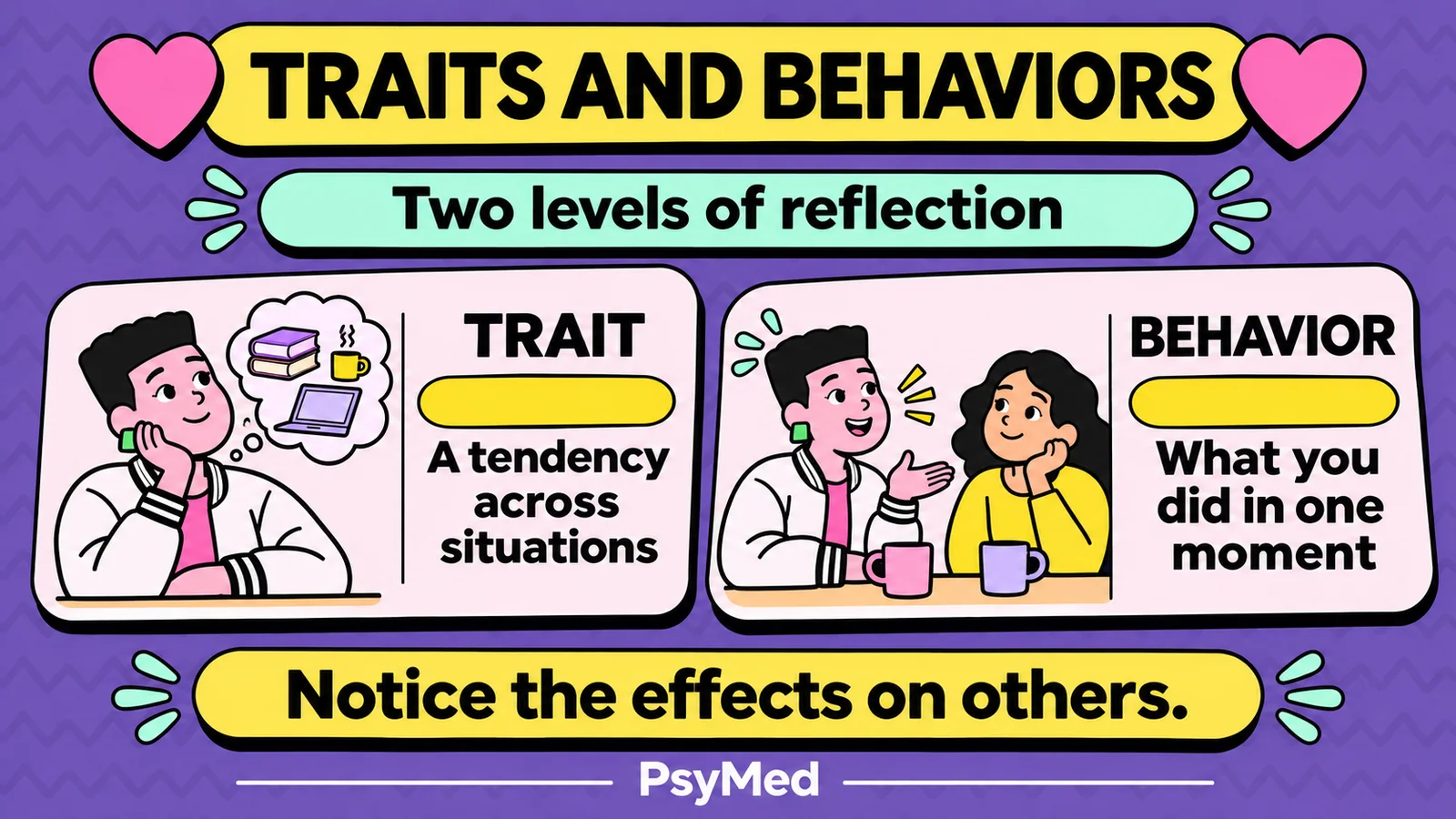
In the largest empirical study of this domain, Crowe and colleagues factor-analysed 104 items drawn from 22 different agreeableness scales, completed by 1,205 people, and found a five-facet structure: Compassion, Morality, Trust, Affability and Modesty. Facet counts differ by method and by which scales go into the pot — a useful reminder that the areas any one test covers are a sampling decision, not a settled map.
View sourceKnow the signs
What does a difficult person look like?
Antagonism shows up as a cluster of habits that reliably impose costs on the people around you. Few people have all of them, and one or two on their own mean little.
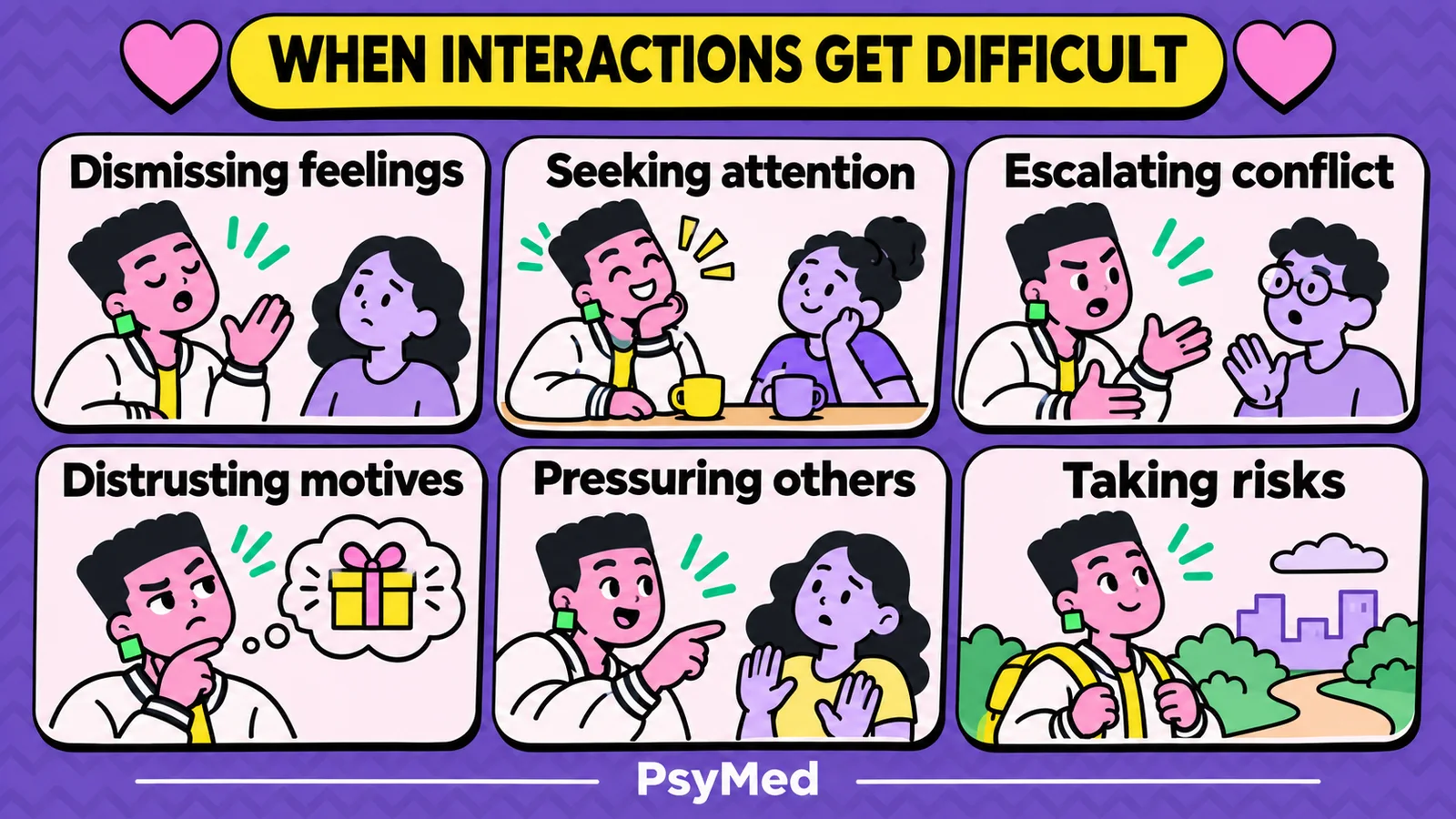
You do not spend much energy on other people’s feelings
The callousness marker, and the one that carries the most weight in this test. Other people’s distress registers faintly, or as an inconvenience, rather than as something that pulls at you.
You think you are more capable than those around you
A settled sense of being above the people you deal with, often accompanied by irritation when you are not treated accordingly.
You get hostile when things do not go your way
Friction turns into confrontation quickly. People have described you as combative, harsh, or quick to attack — a description that tends to arrive from several directions.
You assume people have a hidden agenda
Your default reading of others is that they are out for themselves. This makes trust expensive and makes other people feel suspected before they have done anything.
You use charm, guilt or pressure to get your way
Influence as a tool rather than a conversation. The manipulativeness marker is less about lying than about treating people as levers.
You need to be the one in control
Letting someone else lead, or do it their way, is genuinely uncomfortable. This often reads to others as the most tiring trait of the set.
Difficult vs. disagreeable vs. disordered
These get run together, and the differences matter for what, if anything, you do next.
| Feature | High antagonism | A personality disorder |
|---|---|---|
| What it is | A high position on a normal-range personality dimension. | A clinical diagnosis with defined criteria. |
| Who notices | Usually other people, before the person themselves. | Assessed by a clinician, not by self-report. |
| What it requires | Nothing. It is a description, not a threshold. | Significant impairment or distress, persistent and pervasive. |
| Does this test assess it? | Only the first. A high score describes a trait position and cannot diagnose anything. | |
How this test is built
What the test covers
The 15 statements sample seven areas commonly grouped under antagonism. These are the areas this scale covers; they are a sampling decision rather than a validated factor structure, and the items are not evenly spread across them.
- 01 Cold
Callousness and suspicion
Indifference to others’ feelings, and the assumption that people are out for themselves. Callousness is the most heavily weighted area here, carrying three of the fifteen statements.
- 02 Above
Grandiosity and dominance
Feeling more important or capable than the people around you, expecting special treatment, and needing to be the one in control.
- 03 Against
Aggressiveness, manipulativeness, risk-taking
Hostility when thwarted, using charm or pressure as leverage, and acting on impulse without weighing what it costs. These are the areas most likely to produce visible consequences for other people.
Antagonism is a dimension of normal personality, not a condition in the DSM-5, so there is nothing here to diagnose. The seven areas are also unevenly sampled — callousness contributes three statements and the others two each — so the total is not a clean average across them. Read it as a rough position, not a measurement.
Understanding the context
Where does antagonism come from?
There is no single cause, and most of the evidence here is correlational rather than causal.
It is partly dispositional
Antagonism behaves like the other basic personality dimensions: fairly stable across adulthood, moderately heritable, and not something anyone chooses. That is an explanation, not an excuse, and it says nothing about whether the behaviour has to continue.
Environments that reward it
Settings where dominance pays and cooperation does not will sustain antagonistic habits and select for them. Plenty of people are noticeably more difficult at work than at home, or the reverse, which is informative in itself.
Threat and expectation
Suspicion in particular responds to history. People who have been exploited often become harder to deal with in ways that made sense at the time and have since stopped being useful.
What can actually change
Can a difficult person change?
The trait is relatively stable; the behaviour is not. Almost everything on this test describes something you do, and doing is where the leverage is.
- 01 / OUTSIDE INFORMATION
Ask, and then do not argue
Because self-report is the weak point, the single most useful step is asking someone honest how you come across — and hearing it without rebutting. The urge to rebut is itself diagnostic.
- 02 / PROFESSIONAL SUPPORT
Talking to someone qualified
Therapy for interpersonal patterns does not require a diagnosis. If this is costing you relationships, work or your own peace of mind, it is an ordinary thing to bring to a professional.
- 03 / ONE BEHAVIOUR, NOT A PERSONALITY
Change something specific
You do not have to become agreeable. Picking one concrete habit — not interrupting, not retaliating the same day, letting someone else decide — changes outcomes without requiring you to feel differently.
Research background: Lynam et al. (2019), The basic trait of Antagonism. This page is educational and is not clinical advice.
Practical next steps
What should you do with your result?
Treat it as information about your effect on other people, which is the part a self-report score is worst at and most needs checking.
- 01
Find the area, not the number
A total of 30 built from pure callousness is a different problem from a total of 30 spread evenly. Look back at which statements you agreed with.
- 02
Get a second reading
Ask someone who deals with you regularly to answer the same statements about you. Expect a higher score than your own, and treat the gap as the finding.
- 03
Pick the relationship that matters
Abstract self-improvement goes nowhere. Choose one person currently paying for this and decide what you will do differently with them specifically.
A licensed mental health professional can work with interpersonal patterns, and you do not need a diagnosis to start. If you are in distress, in the US call or text 988 (Suicide & Crisis Lifeline, 24/7). Outside the US, find a helpline at findahelpline.com. If anyone is in immediate danger, call your local emergency number.
Good questions to ask
Difficult person test FAQs
Short, practical answers to the most common questions about antagonism and this test.
There is no line to be on one side of. Antagonism is a continuous dimension and everyone sits somewhere on it. A high score means you endorsed a lot of the habits that make someone costly to deal with; it does not put you in a category, and it says nothing about your worth.
Self-reported antagonism — the low end of agreeableness — sampled across seven areas: callousness, grandiosity, aggressiveness, suspicion, manipulativeness, dominance and risk-taking. Fifteen statements, each scored 0 to 4, for a total of 0 to 60.
No. This is PsyMed’s own 15-statement scale, written by our editorial team and not affiliated with any commercial test of a similar name. It draws on the published literature on antagonism rather than reproducing another product’s items.
Cautiously, and that is the honest answer. Self- and other-reports of antagonism diverge, and they diverge most among people who score highest. A low score on a test like this is weaker evidence than a low score reported by the people who deal with you.
No. Antagonism is a normal-range trait, and personality disorders are clinical diagnoses requiring significant, persistent impairment and a qualified assessment. A high score here is a description of habits, not evidence of a disorder. Dark Triad covers the three best-known antagonistic traits specifically, and is a useful companion to this one.
No. There is nothing here to diagnose, and this page cannot confirm or rule out anything about you. It is an educational self-check.
The trait is fairly stable, but the behaviour moves. Almost every statement here describes something you do rather than something you feel, and specific behavioural commitments change outcomes without requiring a change of personality.
Believe them, provisionally. This test measures what you report about yourself, and the gap between self- and other-ratings is the single best-documented limitation of measures like it. A low score with consistent outside feedback to the contrary is worth more attention than a high score.
Yes. The test is free, needs no account or sign-up, and your result appears immediately in your browser.
Editorial transparency
Sources and review information
This test is based on the research literature on antagonism as a basic personality dimension. Its 15 statements are original statements written by our team to sample seven areas commonly grouped under that trait; they are not drawn from any published inventory or from any commercial test of a similar name. Content is written and reviewed by the PsyMed Editorial Team from the public sources listed here. We are writers and researchers, not clinicians, and this page is educational rather than diagnostic. Read how we build our tests and who we are.
Research and editorial references
- Crowe, M.L., Lynam, D.R., & Miller, J.D. (2017). Uncovering the structure of agreeableness from self-report measures. Journal of Personality, 86(5), 771–787. doi.org/10.1111/jopy.12358
- Lynam, D.R., & Miller, J.D. (2019). The basic trait of Antagonism: An unfortunately underappreciated construct. Journal of Research in Personality, 81, 118–126. doi.org/10.1016/j.jrp.2019.05.012
- American Psychiatric Association. (2022). Diagnostic and Statistical Manual of Mental Disorders (5th ed., text rev.) — for the distinction between trait antagonism and a personality disorder.
- Note on facet counts: the seven areas this test samples are a sampling decision, not a validated factor structure; Crowe et al. derived five agreeableness facets empirically, and other models differ again.
Information, not a verdict
The useful part is the effect on other people.
Use this check-in to look honestly at habits that are easier for others to see than for you, and to decide what, if anything, you want to do differently.
Take the self-check