
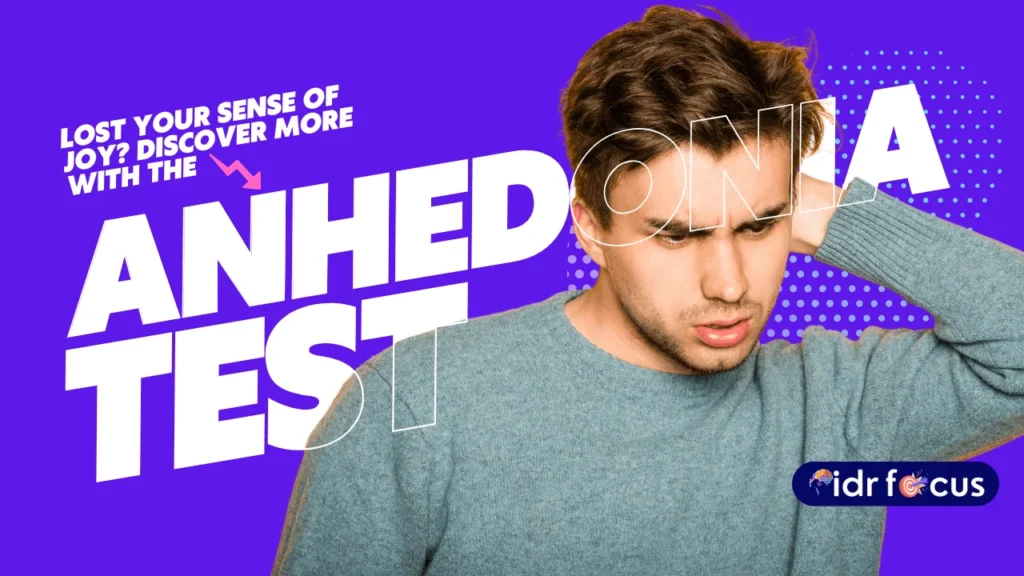
Free Anhedonia Test — Find Out If You’ve Lost the Ability to Feel Pleasure
Do you struggle to feel joy or pleasure? Take our free 15-item Anhedonia Test to understand your emotional experience and learn when to seek support.
Published Updated
Feeling like the things you used to love just don’t do it for you anymore? Like you’re going through the motions — eating, socializing, listening to music — but nothing quite lands the way it used to
That experience has a name: anhedonia. And it’s more common than most people realize.
This free 15-item Anhedonia Test is designed to help you reflect on your recent emotional experiences and understand whether what you’re feeling aligns with recognized signs of anhedonia. It takes about two minutes, and your results are completely private.
What Is Anhedonia?
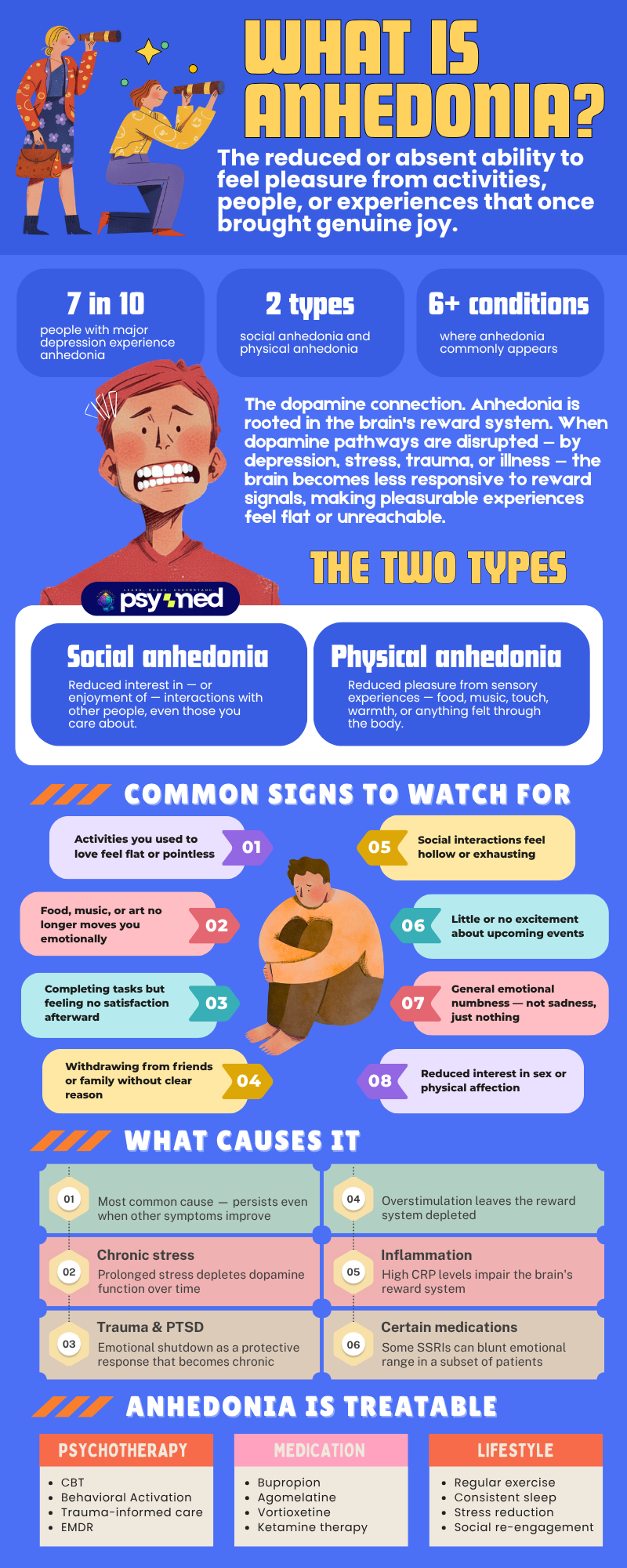
Anhedonia is the reduced or absent ability to feel pleasure — particularly from activities, people, or experiences that used to bring genuine joy. The word itself comes from the Greek an- (“without”) and hēdonē (“pleasure”).
It’s not the same as having a bad week, feeling tired, or temporarily losing motivation. Anhedonia is a persistent emotional flatness — a dimming of the reward response that most of us take for granted. You might still know intellectually that a sunset is beautiful or that a loved one cares about you. But somewhere between knowing and feeling, something goes quiet.
Clinically, anhedonia is recognized as one of the two core symptoms of major depressive disorder (MDD) in the DSM-5-TR — the other being depressed mood. Anhedonia is one of the two gateway symptoms the DSM-5-TR requires for a depression diagnosis — either depressed mood or markedly diminished interest or pleasure must be present — and systematic reviews describe it as a critical dimension of MDD that frequently persists after other symptoms improve, making it one of the most significant and undertreated features of depression (Cao et al., 2019).
Importantly, anhedonia isn’t exclusive to depression. It also appears in:
- Schizophrenia — often as a persistent negative symptom
- Bipolar disorder — particularly during depressive episodes
- Post-traumatic stress disorder (PTSD)
- Substance use disorders — including during early recovery
- Chronic pain conditions
- Burnout and prolonged stress
What Causes Anhedonia?
Anhedonia is rooted in the brain’s reward system — particularly in the role of dopamine, which drives motivation, anticipation, and the sense of satisfaction after something positive happens. When this system is disrupted, the brain becomes less responsive to reward signals, making pleasurable experiences feel flat or out of reach.
Several factors can contribute to this disruption:
- Depression and mood disorders — the most common cause; anhedonia often persists even when other depressive symptoms improve
- Chronic stress — prolonged activation of the stress response depletes dopamine function over time
- Trauma and PTSD — emotional shutdown can be a protective response that later becomes chronic
- Substance use and withdrawal — drugs that overstimulate the reward system can leave it depleted; early sobriety often involves a temporary period of emotional numbness
- Inflammation — research links elevated inflammatory markers (such as C-reactive protein) to reduced connectivity in the brain’s reward circuitry (Felger et al., 2016)
- Certain medications — paradoxically, some SSRIs can blunt emotional range in a subset of patients
What Are the Symptoms of Anhedonia?
Anhedonia can be subtle enough that many people don’t recognize it in themselves — they just know something feels off. Common signs include:
- Feeling indifferent toward hobbies or activities you used to look forward to
- Going through social interactions on autopilot, without a genuine connection
- Food tasting flat, or eating without enjoyment
- Music, films, or art no longer move you emotionally
- Feeling little or no excitement about upcoming events
- Reduced interest in sex or physical affection
- A general sense of emotional numbness or detachment
- Completing tasks but feeling no satisfaction afterward
- Withdrawing from friends or family without a clear reason
One important distinction: anhedonia is often described as the absence of positive emotion, not the presence of sadness. Someone experiencing anhedonia may not feel bad — they may just feel nothing. That absence can be just as disorienting, and just as worthy of attention.
What Is the Anhedonia Test?
This is a 15-item self-assessment designed to help you gauge how much your capacity for pleasure and positive emotion may have been affected recently. It draws on frameworks used in established clinical instruments, including the Snaith–Hamilton Pleasure Scale (SHAPS) and the Temporal Experience of Pleasure Scale (TEPS) — two of the most widely used measures of anhedonia in clinical research.
Each question reflects a real dimension of hedonic experience: enjoyment of activities, emotional responsiveness, social connection, physical pleasure, and anticipatory reward (the ability to look forward to things).
How the test works
You’ll be presented with 15 statements about your recent experiences. For each one, select the response that most honestly reflects how you’ve been feeling — not just today, but over the past few weeks.
Response options range from Almost always to Never, with points assigned on a scale. Your total score places you in one of four categories, described below.
Guidelines for taking the test
- Be honest with yourself. There are no right or wrong answers — only accurate and inaccurate ones. This test is only as useful as the honesty you bring to it.
- Think about your recent pattern, not an unusually good or bad day. What has your emotional baseline been like over the past two to four weeks?
- Substance use can affect results. If you are in active addiction or early recovery, your responses may reflect withdrawal-related numbness rather than a separate psychological condition. A professional can help you distinguish the two.
- This is a starting point, not a verdict. Whatever your result, it is a prompt for reflection and, if needed, a conversation — not a diagnosis.
Content prepared by the PsyMed Editorial Team. Frameworks referenced: the Snaith–Hamilton Pleasure Scale (SHAPS), the Temporal Experience of Pleasure Scale (TEPS), and DSM-5-TR criteria for anhedonia in major depressive disorder — all cited in the references at the end of this page.
Scoring and What Your Results Mean
Your responses are scored on a scale of 0 to 4 per question, giving a total possible range of 0 to 60 points. Higher scores indicate a greater frequency of anhedonic experiences.
What Your Score Means
| Score Range | Category | What It Suggests |
|---|---|---|
| 0 – 14 | Minimal | Little to no indication of anhedonia. Your capacity for pleasure and positive emotion appears largely intact. |
| 15 – 29 | Mild | Some signs of reduced pleasure or emotional engagement. Worth monitoring, especially if you’ve noticed a recent shift. |
| 30 – 44 | Moderate | Meaningful disruption to your ability to feel joy or connection. Speaking with a mental health professional would be a valuable next step. |
| 45 – 60 | Significant | Strong indicators of anhedonia. This level of emotional numbness can significantly affect your quality of life, relationships, and well-being. Professional support is strongly recommended. |
Important: A high score does not mean you have depression or any specific diagnosis. Anhedonia can appear across many different conditions — and it is treatable. These categories are designed to help you understand your experience, not label it.
What Helps With Anhedonia?
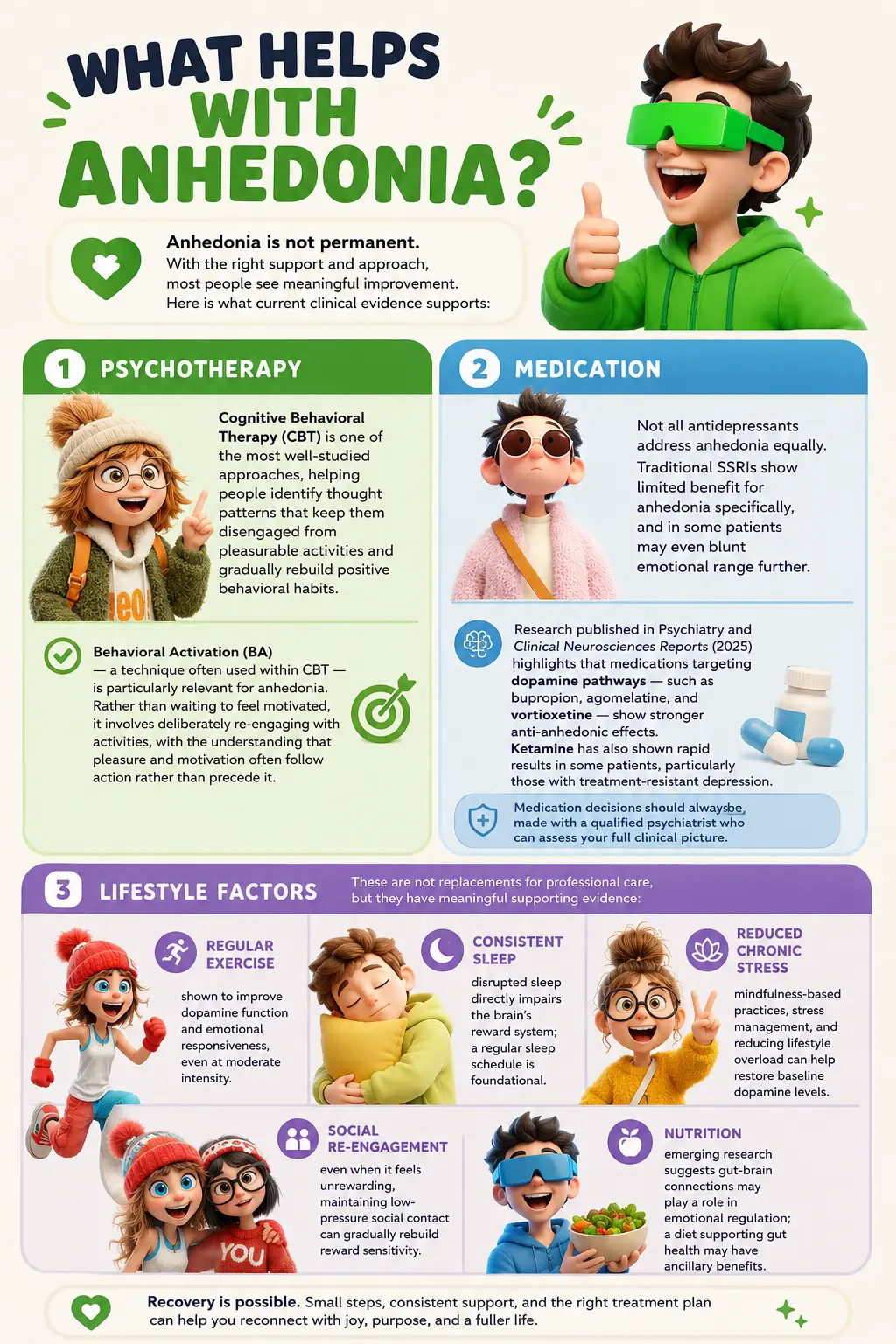
Anhedonia is not permanent. With the right support and approach, most people see meaningful improvement. Here is what current clinical evidence supports:
Psychotherapy
Cognitive Behavioral Therapy (CBT) is one of the most well-studied approaches, helping people identify thought patterns that keep them disengaged from pleasurable activities and gradually rebuild positive behavioral habits.
Behavioral Activation (BA) — a technique often used within CBT — is particularly relevant for anhedonia. Rather than waiting to feel motivated, it involves deliberately re-engaging with activities, with the understanding that pleasure and motivation often follow action rather than precede it.
Medication
Not all antidepressants address anhedonia equally. Traditional SSRIs (selective serotonin reuptake inhibitors) show limited benefit for anhedonia specifically, and in some patients may even blunt emotional range further.
A systematic review of pharmacotherapies for anhedonia in MDD found that most antidepressants improved anhedonia measures, with agents acting beyond simple serotonin reuptake — such as agomelatine and bupropion — among those showing benefit (Cao et al., 2019). Glutamatergic agents, notably ketamine, have shown rapid effects in some patients, particularly those with treatment-resistant depression.
Medication decisions should always be made with a qualified psychiatrist who can assess your full clinical picture.
Lifestyle factors
These are not replacements for professional care, but they have meaningful supporting evidence:
- Regular exercise — shown to improve dopamine function and emotional responsiveness, even at moderate intensity
- Consistent sleep — disrupted sleep directly impairs the brain’s reward system; a regular sleep schedule is foundational
- Reduced chronic stress — mindfulness-based practices, stress management, and reducing lifestyle overload can help restore baseline dopamine levels
- Social re-engagement — even when it feels unrewarding, maintaining low-pressure social contact can gradually rebuild reward sensitivity
- Nutrition — emerging research suggests gut-brain connections may play a role in emotional regulation; a diet supporting gut health may have ancillary benefits
When to seek help urgently
Anhedonia, particularly when accompanied by depressed mood, hopelessness, fatigue, or any thoughts of self-harm, warrants prompt professional attention. A meta-analysis found that anhedonia is associated with increased suicidal ideation independently of overall depression severity (Ducasse et al., 2018).
If you are struggling right now, please contact the 988 Suicide and Crisis Lifeline by calling or texting 988. You don’t have to be in crisis to reach out — they’re there for anyone who needs to talk.
Expert Insight
This test is developed in alignment with established clinical frameworks for assessing anhedonia, including the Snaith–Hamilton Pleasure Scale (SHAPS) and instruments referenced in peer-reviewed research.
Our content is informed by the work of Dr. Hannah K. Betcher, M.D., a psychiatrist at Mayo Clinic specializing in mood disorders, who has written on the importance of identifying anhedonia early as a pathway to more targeted and effective treatment. As Dr. Betcher emphasizes, anhedonia can often be a component of depression — but with the right approach to treatment, it can be meaningfully addressed.
Important Disclaimer
This Anhedonia Test is a self-assessment tool for educational and reflective purposes only. It is not a diagnostic instrument and cannot replace evaluation by a licensed mental health professional. Your results should be understood as a starting point for self-awareness and, where appropriate, a prompt to seek professional guidance — not as a clinical diagnosis.
If you are currently experiencing symptoms that are affecting your daily life, relationships, or sense of well-being, please reach out to a qualified mental health professional.
Frequently Asked Questions
What is the difference between anhedonia and depression?
Anhedonia is a symptom — one of the two core features of major depressive disorder, along with persistent low mood. You can experience anhedonia without a full depressive episode, and depression can occur without pronounced anhedonia. That said, the two frequently overlap, and significant anhedonia always warrants attention, whether or not a formal diagnosis of depression applies.
Can anhedonia go away on its own?
In mild cases linked to temporary stress or burnout, anhedonia can improve with lifestyle changes and time. However, moderate-to-significant anhedonia — especially when it has persisted for more than two weeks — is unlikely to resolve on its own without support. Early intervention typically leads to faster and more complete recovery.
How long does anhedonia last?
This varies significantly by cause. When linked to depression, anhedonia can last weeks to months without treatment. With appropriate therapy and/or medication, many people begin to notice improvement within 6–12 weeks. Anhedonia related to substance use recovery typically improves gradually over months as the brain’s reward system recalibrates.
Is anhedonia the same as feeling sad?
No — and this is one of the most important distinctions. Anhedonia is typically characterized by the absence of positive emotion rather than the presence of negative emotion. Many people with anhedonia don’t feel sad; they feel numb, flat, or emotionally hollow. This absence can be difficult to articulate, and sometimes harder to recognize as a problem than overt sadness.
Can anhedonia affect physical sensations?
Yes. Physical anhedonia refers specifically to reduced pleasure from sensory experiences — food, music, physical touch, sex, and other bodily pleasures. This is distinct from social anhedonia (loss of enjoyment from social interaction), though both can be present simultaneously.
What should I do if I score in the moderate or significant range?
Take your result seriously and speak with a mental health professional — ideally a therapist, psychologist, or psychiatrist. You don’t need to wait until things feel unbearable. A professional can help clarify what’s driving your experience and develop a treatment plan tailored to you. If you’re unsure where to start, your primary care doctor can often provide a referral.
What is the difference between anhedonia and apathy?
They overlap but describe different losses. Anhedonia is a loss of pleasure — you may still want things, or still do them, but the reward does not register. Apathy is a loss of motivation and caring — the drive to start or pursue anything is reduced, regardless of whether it would feel good. In practice the two often appear together, and both involve the brain’s reward and motivation circuitry, but they can occur separately: someone can be motivated and still feel no enjoyment, or feel enjoyment when it arrives while lacking any drive to seek it out. Clinicians also separate anhedonia into anticipatory (losing the ability to look forward to things) and consummatory (losing the enjoyment in the moment) components — a distinction built into the Temporal Experience of Pleasure Scale.
What test do clinicians use to measure anhedonia?
There is no single universal test, but two self-report instruments dominate research and practice. The Snaith–Hamilton Pleasure Scale (SHAPS) is a 14-item measure of hedonic tone, validated in 1995 and still the most widely used anhedonia scale. The Temporal Experience of Pleasure Scale (TEPS) separates anticipatory from consummatory pleasure, which matters because the two can respond differently to treatment. Clinicians also pick anhedonia up through items inside broader depression measures, such as the loss-of-interest item in the PHQ-9. This Anhedonia Test draws on the dimensions those instruments measure, but it is a reflective screening tool rather than a validated clinical scale, and it cannot replace assessment by a professional.
Can medication cause anhedonia?
It can, and it is worth raising with a prescriber rather than assuming the symptom is simply your depression. SSRIs in particular are associated with emotional blunting in a subset of patients — a flattening of emotional range that can look and feel like anhedonia but is driven by the medication rather than the underlying condition. The distinction matters because the response differs: medication-related blunting may improve with a dose adjustment or a switch to an agent with a different mechanism, whereas anhedonia arising from the depression itself needs the depression treated. If your emotional flatness began or clearly worsened after starting or changing a medication, tell your prescriber — and do not stop or alter a psychiatric medication on your own.
Further reading
What Is Anhedonia? explains the distinction this test is built around — losing the anticipation of pleasure versus losing the enjoyment itself — and why it matters for treatment.
Related Tests
Anhedonia frequently overlaps with other emotional and psychological experiences. These assessments may offer additional insight:
- Social Anhedonia Test — focuses specifically on loss of pleasure in social contexts rather than across the board
- Clinical Depression Test — screens for major depressive disorder, the condition anhedonia most often accompanies
- Dysthymia Test — assesses persistent low-level depression, where flatness can become the baseline
- High-Functioning Depression Test — for those who appear fine on the outside while feeling little inside
- Burnout Test — burnout and anhedonia overlap substantially, and telling them apart changes what helps
- Bipolar Test — anhedonia is common during bipolar depressive episodes
- Alexithymia Test — difficulty identifying and naming emotions, which is often mistaken for feeling nothing
Loss of pleasure in activities, including bonding moments with a new baby, can be an early indication of perinatal depression. For those who are pregnant or postpartum, the Edinburgh Postnatal Depression Scale (EPDS) is a validated tool for identifying these symptoms.
References
- American Psychiatric Association. (2022). Diagnostic and Statistical Manual of Mental Disorders (5th ed., text rev.; DSM-5-TR). [Anhedonia as one of two gateway criteria for major depressive disorder] psychiatry.org
- Snaith, R.P., Hamilton, M., Morley, S., Humayan, A., Hargreaves, D., & Trigwell, P. (1995). A scale for the assessment of hedonic tone: the Snaith–Hamilton Pleasure Scale. British Journal of Psychiatry, 167(1), 99–103. [The SHAPS, the most widely used anhedonia measure] pubmed.ncbi.nlm.nih.gov
- Gard, D.E., Gard, M.G., Kring, A.M., & John, O.P. (2006). Anticipatory and consummatory components of the experience of pleasure: A scale development study. Journal of Research in Personality, 40(6), 1086–1102. [The TEPS, source of the anticipatory vs consummatory distinction] doi.org
- Ducasse, D., Loas, G., Dassa, D., Gramaglia, C., Zeppegno, P., et al. (2018). Anhedonia is associated with suicidal ideation independently of depression: A meta-analysis. Depression and Anxiety, 35(5), 382–392. [Basis for the suicide-risk note in this article] pubmed.ncbi.nlm.nih.gov
- Cao, B., Zhu, J., Zuckerman, H., Rosenblat, J.D., Brietzke, E., et al. (2019). Pharmacological interventions targeting anhedonia in patients with major depressive disorder: A systematic review. Progress in Neuro-Psychopharmacology & Biological Psychiatry, 92, 109–117. [Evidence on agomelatine, bupropion and ketamine for anhedonia specifically] pubmed.ncbi.nlm.nih.gov
- Felger, J.C., Li, Z., Haroon, E., Woolwine, B.J., Jung, M.Y., et al. (2016). Inflammation is associated with decreased functional connectivity within corticostriatal reward circuitry in depression. Molecular Psychiatry, 21(10), 1358–1365. [Basis for the inflammation and reward-circuitry point] pubmed.ncbi.nlm.nih.gov
- National Institute of Mental Health. Depression. [Overview, treatment options and when to seek help] nimh.nih.gov
Related Tests
See All Quiz →
You may also like
See All Quiz →
Emotional and Trait Assessments · Personality
Introvert Test: Are You an Introvert, Extrovert, or Ambivert?
→