
Kleptomania Test – Quick & Easy 15-Item Quiz
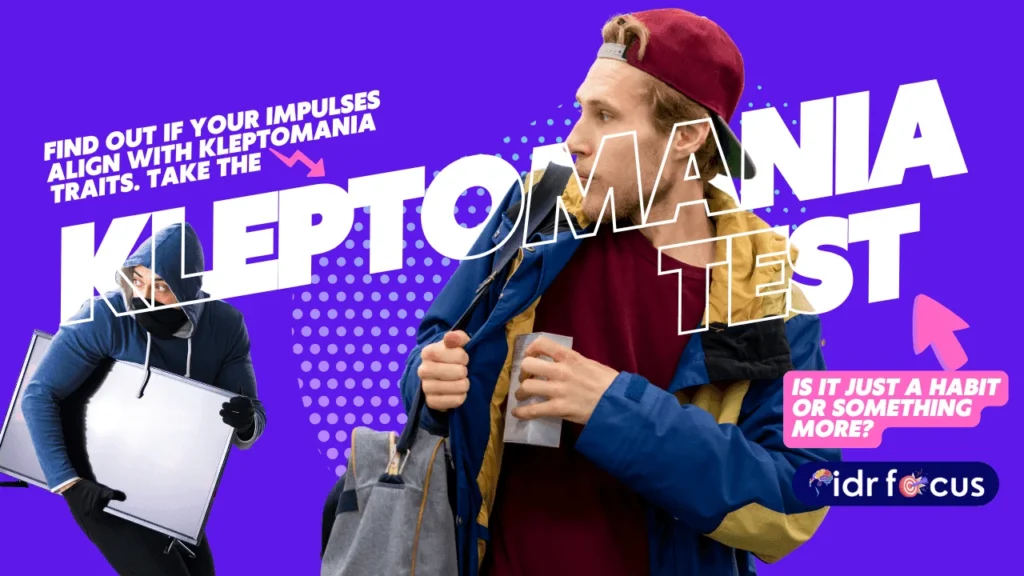
Take our Kleptomania Test for a quick self-assessment. Understand your urges to steal and learn when to seek professional help for better management.
Published Updated
It isn’t about the object. You don’t need it. You might not even want it. What you need — in that specific moment — is to take it. The tension builds until the act, and the act brings relief. Then the guilt comes, and the cycle closes, and eventually it starts again.
If that sequence feels familiar, this Kleptomania test is for you. Not because taking something that isn’t yours is something to excuse, but because the experience you’re describing — the urge, the tension, the compulsion, the aftermath — is recognized clinically as a distinct impulse-control disorder that is separate from ordinary theft, separate from antisocial behavior, and genuinely treatable.
This free Kleptomania Test screens for the impulse-control pattern that defines kleptomania using criteria drawn from the DSM-5-TR (APA, 2022). 15 questions. Instant, private results. This is a screening tool — not a diagnosis. But if your responses indicate a significant pattern, that’s worth taking to a mental health professional.
What Is Kleptomania?
Kleptomania is an impulse-control disorder classified in the DSM-5-TR under Disruptive, Impulse-Control, and Conduct Disorders (code 312.32 / F63.2). It is defined by a recurrent failure to resist impulses to steal objects that are not needed for personal use or for their monetary value — the theft is driven by the impulse cycle itself, not by need, greed, or anger.
The DSM-5-TR diagnostic criteria for kleptomania are specific and clinically precise:
- A. Recurrent failure to resist impulses to steal objects that are not needed for personal use or for their monetary value.
- B. Increasing sense of tension immediately before committing the theft.
- C. Pleasure, gratification, or relief at the time of committing the theft.
- D. The stealing is not committed to express anger or vengeance and is not in response to a delusion or hallucination.
- E. The stealing is not better explained by conduct disorder, a manic episode, or antisocial personality disorder.
All five criteria must be met for a clinical diagnosis. The most distinguishing features are criteria B and C—the tension-relief cycle that surrounds the act of stealing. Without that internal experience, the behavior is something else. With it, the pattern points specifically toward kleptomania.
Kleptomania is estimated to affect approximately 0.3–0.6% of the general population (APA, 2013; ScienceDirect, 2020) — comparable in prevalence to bipolar disorder or schizophrenia, yet significantly underdiagnosed due to the shame involved in disclosure. It occurs in approximately 4–24% of identified shoplifters (DSM-5), though most shoplifters do not have kleptomania. The majority of people with kleptomania are women, with research suggesting a female-to-male ratio of approximately 3:1.
Kleptomania Symptoms — What the Impulse Cycle Actually Feels Like
Kleptomania is not well understood by people who haven’t experienced it — and it’s frequently mischaracterized by those who have. The following is what the clinical literature and the accounts of people diagnosed with kleptomania actually describe.
The buildup — mounting tension before stealing.
Kleptomania typically involves a prodromal phase of increasing psychological tension or arousal that builds before the theft. This is not planned deliberation — it’s more like a pressure that builds until it demands release. People with kleptomania often describe this as intrusive, unwanted, and not within their control to simply dismiss.
The act — brief relief or gratification.
The moment of stealing produces a subjective sense of relief, release, or gratification — not pride or triumph, but the release of the tension that preceded it. This is the reinforcement mechanism that drives the cycle. The relief is immediate and real, which is part of what makes the behavior so difficult to resist through willpower alone.
The aftermath — guilt, shame, and distress.
Following the act, most people with kleptomania experience significant guilt, shame, fear of discovery, and distress about their own behavior. Many discard the stolen items, hide them, give them away, or even return them anonymously. The awareness that the behavior is wrong is fully intact — this is what makes kleptomania ego-dystonic, meaning the behavior conflicts with the person’s own values and self-concept. This is a critical distinction from antisocial theft.
The cycle repeats.
Despite the guilt and the intention to stop, the impulse returns. Many people with kleptomania make repeated, genuine attempts to stop — and fail — across months or years before seeking help. The inability to stop despite sincere effort is one of the defining features of the disorder.
The objects don’t matter.
Kleptomania targets don’t follow economic logic. People steal inexpensive items they could easily afford, objects they have no use for, things they sometimes immediately discard. The value of the object is irrelevant to the impulse — what matters is the act and the cycle around it.
Kleptomania vs. Shoplifting vs. OCD — Critical Distinctions
Kleptomania is frequently confused with two other things: ordinary shoplifting (intentional theft for gain) and OCD (where compulsions are driven by anxiety reduction around specific fears). Understanding the differences matters for accurate self-assessment.
| Feature | Kleptomania | Shoplifting / Ordinary Theft | OCD (Compulsive Taking) |
|---|---|---|---|
| Motivation | Impulse-relief cycle — not need or gain | Personal gain, financial need, thrill-seeking | Anxiety reduction — fear-based compulsion |
| Planning | Typically unplanned or impulsive | Often premeditated | Driven by obsessive thought, sometimes ritualistic |
| Object value | Irrelevant — often low or zero value | Object is specifically chosen for value or use | May be specific object tied to obsession |
| Emotional cycle | Tension → stealing → relief → guilt | Intent → execution → outcome | Obsession → anxiety → compulsion → temporary relief |
| Attitude toward behavior | Ego-dystonic — person knows it’s wrong, wants to stop | Ego-syntonic — person may justify or accept behavior | Ego-dystonic — person is distressed by the thoughts |
| DSM-5-TR classification | Impulse-control disorder (312.32 / F63.2) | Not a mental disorder | OCD and related disorders (300.3 / F42) |
| Comorbidities | Depression, anxiety, eating disorders, OCD | Varies — ASPD, conduct disorder, substance use | Anxiety disorders, depression, body dysmorphia |
What Causes Kleptomania?
Kleptomania does not have a single established cause. Current research points to an interaction of neurobiological, genetic, and psychological factors — consistent with other impulse-control disorders on the impulsive-compulsive spectrum.
Serotonin system dysregulation.
The most consistently implicated neurochemical mechanism is dysregulation of the serotonin system, which plays a central role in impulse control and behavioral inhibition. SSRIs — which modulate serotonin — have shown some efficacy in kleptomania treatment, though their effect is inconsistent (Dannon, 2002, reported positive outcomes in 19 of 30 cases). Notably, SSRIs have also been reported to trigger kleptomania in some individuals, suggesting the serotonin relationship is complex.
Opioid system involvement.
Research on opioid receptor antagonists — particularly naltrexone — has shown promising results in kleptomania treatment, suggesting that the relief experienced during stealing may involve the brain’s opioid reward system. This links kleptomania mechanistically to addictive disorders, where opioid pathways mediate pleasure and reinforcement.
Dopaminergic reward pathways.
As with other impulse-control disorders and behavioral addictions, dopamine reward circuitry is thought to be implicated — specifically, the way the act of stealing produces a dopamine-mediated reward signal that reinforces repetition of the behavior despite its consequences.
Genetic predisposition.
Family history of impulse-control disorders, OCD, mood disorders, or substance use disorders is associated with elevated risk. Kleptomania frequently co-occurs with these conditions in the same individual and in their family members.
Comorbid psychiatric conditions.
Kleptomania is rarely a standalone diagnosis. Research consistently finds high rates of comorbidity with major depressive disorder, anxiety disorders, eating disorders (particularly bulimia nervosa), and OCD. Grant et al. (2008) found significant gender differences — women with kleptomania are more likely to have co-occurring depression and anxiety, have a later onset age, and tend to steal different categories of items compared to men.
How This Kleptomania Test Works
This test assesses the three-domain pattern at the core of kleptomania: the impulse and urge cycle, the emotional experience around stealing, and the functional impact on your life. All questions are drawn from the DSM-5-TR diagnostic criteria and validated clinical frameworks for kleptomania assessment.
Answer based on your typical experience — not your best stretch and not your worst episode. Be honest: the results are private, and the only person this information serves is you.
Never = 0 | Rarely = 1 | Sometimes = 2 | Often = 3 | Always = 4
Total range: 0–60. This is a screening tool — it cannot diagnose kleptomania. But a significant score warrants seeing a mental health professional who can conduct a proper clinical evaluation.
Understanding Your Kleptomania Test Score
| Score Range | Category | What It Suggests |
|---|---|---|
| 0 – 15 | Minimal — Few or No Indicators | Responses suggest few or no significant indicators of kleptomania. The impulse-control pattern associated with kleptomania does not appear to be meaningfully present. |
| 16 – 30 | Mild — Some Indicators Present | Some kleptomania-related patterns are present. The impulse-relief cycle may be occurring at a mild or intermittent level. Worth monitoring and discussing with a professional if concerns persist. |
| 31 – 45 | Moderate — Significant Pattern Present | Multiple indicators of kleptomania are present across the impulse, emotional, and functional domains. A clinical evaluation by a mental health professional is strongly recommended. |
| 46 – 60 | High — Strong Indicators Across Domains | A strong, consistent kleptomania pattern is indicated across multiple domains. Please seek a formal evaluation from a mental health professional experienced in impulse-control disorders. |
Treatment for Kleptomania — What Actually Works
Kleptomania is underresearched relative to its prevalence and impact, but the evidence base for treatment is growing. There is no single universally effective treatment, and most clinicians use a combination approach tailored to the individual — particularly given the high rate of comorbid conditions.
Cognitive Behavioral Therapy (CBT). The best-evidenced psychological treatment for kleptomania. Specific CBT techniques that have shown efficacy include covert sensitization (pairing the stealing impulse with imagined negative consequences), imaginal desensitization (using relaxation techniques to reduce the anxiety driving the impulse), and systematic desensitization. CBT also addresses the thought patterns that maintain the cycle — shame-based avoidance of help-seeking, distorted beliefs about control, and cognitive distortions around the behavior itself.
Naltrexone (opioid receptor antagonist). The most consistently supported pharmacological intervention for kleptomania. Naltrexone blocks opioid receptors, reducing the reward signal associated with stealing and weakening the reinforcement cycle. Clinical case series have shown meaningful reductions in urge intensity and stealing frequency. It is most effective when combined with CBT.
SSRIs. Selective serotonin reuptake inhibitors have shown inconsistent results in kleptomania — some patients benefit significantly, others do not, and a small number experience worsening. They are more consistently useful for treating comorbid depression and anxiety, which in turn may reduce the frequency of kleptomania episodes. Medication decisions should always be made with a prescribing doctor.
Mood stabilizers. Particularly useful when kleptomania co-occurs with mood instability or bipolar disorder. Lithium and valproate have been used with some success in this subgroup.
Addressing comorbidities. Given the strong clinical association between kleptomania and depression, anxiety, eating disorders, and OCD, effective treatment of kleptomania almost always requires identifying and treating any co-occurring conditions. Treating the kleptomania in isolation while leaving comorbid depression or anxiety unaddressed typically produces limited results.
Frequently Asked Questions
What is kleptomania?
Kleptomania is an impulse-control disorder (DSM-5-TR code 312.32 / F63.2) characterized by recurrent failure to resist impulses to steal objects that are not needed for personal use or monetary value, accompanied by increasing tension before stealing and pleasure or relief at the time of the act. It is distinct from ordinary theft because the motivation is the impulse cycle itself — not need, gain, or malice. The person is typically fully aware that the behavior is wrong and experiences significant guilt afterward.
Am I a kleptomaniac if I’ve shoplifted?
Not necessarily. Shoplifting and kleptomania are different. Shoplifting is intentional theft, typically motivated by wanting the item or financial gain. Kleptomania is an impulse-control disorder where the object stolen has no particular value to the person, and the behavior is driven by an internal tension-relief cycle rather than deliberate choice. The DSM-5-TR estimates kleptomania occurs in approximately 4–24% of identified shoplifters — meaning most shoplifters do not have kleptomania. The key question is whether you experience the escalating tension before stealing and the relief-based cycle after — that specific experience distinguishes kleptomania from ordinary theft.
How common is kleptomania?
Kleptomania affects approximately 0.3–0.6% of the general population — comparable in prevalence to schizophrenia or bipolar disorder, though significantly underdiagnosed (APA DSM-5; Springer Nature, 2025). Women are diagnosed with kleptomania at approximately three times the rate of men. The condition often goes undetected for years because individuals rarely voluntarily disclose it due to shame, fear of legal consequences, and stigma.
Can kleptomania be cured?
There is no established “cure,” but kleptomania responds well to treatment in many cases. Cognitive Behavioral Therapy — particularly covert sensitization and imaginal desensitization — combined with pharmacological support (especially naltrexone) has produced significant reductions in urge frequency and stealing behavior in clinical settings. Treatment of co-occurring depression, anxiety, and other conditions is also important. With appropriate professional support, most people with kleptomania can achieve meaningful control over the disorder.
Why do people with kleptomania steal things they don’t need?
Because the object is not the point — the impulse cycle is. Kleptomania is driven by an internal psychological mechanism: tension builds, the act of stealing releases it, and the relief reinforces the behavior. The stolen object itself is largely incidental to this cycle. This is why people with kleptomania frequently steal inexpensive items they could easily afford, have no use for, or immediately discard — the object’s value is not what the behavior is about.
Is kleptomania related to OCD?
Kleptomania sits on what researchers call the impulsive-compulsive spectrum — sharing features with both OCD and addictive disorders. Like OCD, the behavior is ego-dystonic (the person doesn’t want to do it) and driven by a compulsion that produces temporary relief. Unlike classic OCD, the compulsion in kleptomania is driven by an impulse-reward cycle rather than fear and anxiety reduction. Research in Scientific Reports (2025) specifically examined kleptomania on the impulsive-compulsive spectrum, finding shared features with both poles. The clinical distinction matters for treatment — OCD-focused approaches (ERP) and impulse-control approaches (CBT covert sensitization, naltrexone) have different mechanisms and different evidence profiles.
Related Tests
Kleptomania rarely occurs in isolation. These tests cover the conditions most commonly associated with it:
- Impulse Control Disorder Quiz — broader screening for impulse dysregulation across multiple behavioral domains
- Intermittent Explosive Disorder Test — another impulse-control disorder in the same DSM-5-TR category; frequently co-occurs with kleptomania
- Depression Test — major depressive disorder is the most common comorbidity with kleptomania
- Anxiety Test — anxiety disorders frequently co-occur with kleptomania and can drive the impulse cycle
- OCD Test — kleptomania shares features with OCD on the impulsive-compulsive spectrum
- Gambling Addiction Test — shares the reward-based impulse cycle found in kleptomania; behavioral addiction overlap
For more impulse-control and addiction screenings, visit our Addiction and Impulse Control collection.
References
- American Psychiatric Association. (2022). Diagnostic and Statistical Manual of Mental Disorders, Fifth Edition, Text Revision (DSM-5-TR). 312.32 (F63.2). psychiatry.org
- Grant, J.E., Kim, S.W., & Odlaug, B.L. (2008). A double-blind, placebo-controlled study of the opiate antagonist, naltrexone, in the treatment of kleptomania. Biological Psychiatry, 65(7), 600–606. PMID: 18374304
- Grant, J.E., et al. (2008). Gender-related differences in individuals seeking treatment for kleptomania. CNS Spectrums, 13(3), 235–245. PMID: 18323753
- Mouta, S., et al. (2022). Big Little Thieves — Kleptomania Treatment. European Psychiatry, 65(S1). pmc.ncbi.nlm.nih.gov
- Giovanelli, A., et al. (2025). Kleptomania on the impulsive-compulsive spectrum: Clinical and therapeutic considerations for women. Scientific Reports, 15(1). nature.com
- Dannon, P.N. (2002). Topiramate for the treatment of kleptomania: A case series and review of the literature. Clinical Neuropharmacology, 25(6), 331–335. PMID: 12469009
- ScienceDirect. (2020). Kleptomania. In Functional Analysis in Clinical Treatment, 2nd ed. sciencedirect.com
Related Tests
See All Quiz →
Addiction and Impulse Control
Is Gambling Becoming a Problem? Take This Free Gambling Addiction Test (PGSI)
→

You may also like
See All Quiz →
Personality Disorders
Could You Have OCPD? Take This Obsessive Compulsive Personality Disorder Test
→