

Have you ever asked yourself, “Am I a psychopath?”
Maybe you’ve noticed emotional detachment, difficulty feeling empathy, manipulative tendencies, or a pattern of calculated behavior. Or perhaps someone has labeled you a psychopath, and now you want to know whether there’s any psychological basis behind it.
This free Psychopath Test is inspired by clinical research, including traits measured in the Hare Psychopathy Checklist–Revised (PCL-R). While this is not an official diagnosis, it helps you explore personality patterns commonly associated with psychopathy, such as impulsivity, lack of remorse, and interpersonal manipulation.
Answer honestly. Your results are instant and completely private.
Understanding Psychopathy
The Spectrum of Psychopathic Traits
Psychopathy is often misunderstood as a stark personality disorder characterized solely by antisocial behaviors and a lack of empathy. However, psychopathic traits exist on a spectrum, and this online tool aims to shed light on where one might stand on this spectrum.
How the Psychopathy Test Works
The journey into the human psyche begins with the quiz, a diagnostic tool that measures a range of personality traits and behaviors associated with psychopathy. The most renowned among these tests is the Hare Psychopathy Checklist-Revised (PCL-R), developed by Canadian psychologist Dr. Robert Hare, and is widely used in forensic psychology to assess psychopathic traits.
The quiz assesses factors like emotional detachment, lack of empathy, and antisocial behaviors—traits often associated with psychopathy. It involves a 20-item checklist, each representing a specific characteristic or behavior. These items are scored on a scale, and the total score is used to evaluate the presence and intensity of psychopathic traits.
Understanding Your Psychopathy Test Results
This Psychopathy Test includes 20 questions designed to explore characteristics commonly associated with psychopathic traits. These questions cover areas like superficial charm, empathy levels, impulsivity, and antisocial behaviors—traits that are often measured in professional psychopathy assessments.
How Scoring Works
Each question has five response options: Never, Rarely, Sometimes, Often, and Always. Each choice reflects the degree to which a certain trait is present in your behavior or personality.
- Never indicates that the trait is not present in your behavior.
- Rarely suggests the trait is minimally present.
- Sometimes shows the trait may appear occasionally.
- Often implies a moderate presence of the trait.
- Always reflects a strong, consistent presence of the trait.
Your answers are summed to generate a total score, which determines your position across three categories of psychopathic tendencies:
- Low Psychopathic Traits – Indicates few or no traits typically associated with psychopathy. Individuals in this category are less likely to display psychopathic tendencies.
- Moderate Psychopathic Traits – Suggests some psychopathic characteristics. Individuals may show occasional behaviors or attitudes that align with psychopathic traits.
- High Psychopathic Traits – Indicates a significant presence of psychopathic characteristics. Those in this category may show many behaviors or attitudes associated with psychopathy.
These categories offer insight into the degree to which psychopathic traits may be present but are not intended as a formal diagnosis. If your results raise questions or concerns, consider reaching out to a mental health professional who can provide further guidance and support.
The Importance of Professional Evaluation
While the psychopathy test offers valuable insights, it’s crucial to remember that a mental health professional should interpret any indication of serious psychopathic tendencies. This diagnostic tool is a starting point for understanding, not a clinical diagnosis.
The Role of the PCL-R Test in Professional Diagnosis
Beyond the “Psychopath Test”: The PCL-R
For a more comprehensive assessment, mental health professionals often use the Psychopathy Checklist-Revised (PCL-R) test. This diagnostic tool assesses a broader range of behaviors and is a standardized method for evaluating criminal versatility and other psychopathy-related factors.
Psychopath vs Sociopath vs Narcissist
Many people use these terms interchangeably. In psychology, they are not the same.
Understanding the differences helps you interpret your test results more accurately.
Psychopath
Psychopathy is commonly linked to:
- Emotional detachment
- Superficial charm
- Lack of empathy
- Manipulative behavior
- Calculated risk-taking
Psychopathy is not an official DSM-5 diagnosis. It overlaps strongly with antisocial personality disorder but focuses more on emotional traits and interpersonal manipulation.
If you’re unsure whether your traits are more socially reactive or coldly calculated, compare your results with our Sociopath Test.
Sociopath
Sociopathy is often used to describe someone with antisocial traits who:
- Acts impulsively
- Struggles with anger control
- Forms weak attachments
- Shows disregard for rules
Unlike classic psychopathy, sociopathic behavior is often more reactive and emotionally driven.
To explore this pattern further, take our Antisocial Personality Disorder Test for a broader clinical screening.
Narcissist
Narcissism centers on:
- Grandiosity
- Need for admiration
- Sense of superiority
- Sensitivity to criticism
- While narcissists can be manipulative, their motivation is usually ego reinforcement, not emotional detachment.
If your results suggest strong ego-driven traits, try our Narcissistic Personality Disorder Quiz to compare patterns.
The Dark Triad Connection
Psychopathy, narcissism, and Machiavellianism together form what psychologists call the Dark Triad.
These traits overlap but operate differently in relationships and social behavior.
If you want a broader personality profile covering all three traits, take our Dark Triad Test.
Recommendations to Prevent it
Addressing and managing psychopathic traits requires a multifaceted approach. It often involves psychological counseling, behavioral therapies, and continuous support. These strategies are not about ‘curing’ psychopathy — as it’s a deeply ingrained part of a person’s personality — but rather about managing its manifestations and integrating healthier social and emotional behaviors.
Signs of People with Psychopathic Tendencies
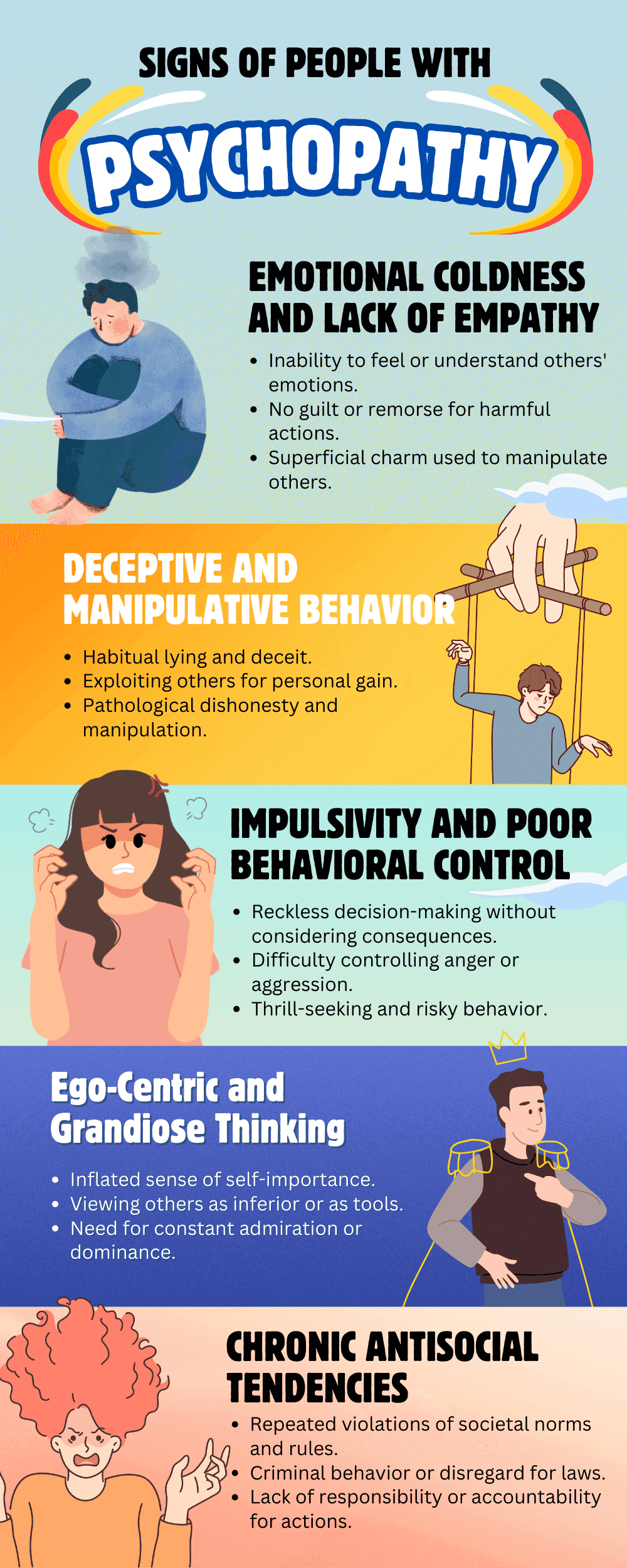
Important Note:
The “Psychopath Test” is a valuable tool for anyone curious about their personality traits related to psychopathy. However, it’s just the first step. Consulting with a mental health professional is crucial for anyone concerned about their mental health or personality traits.
Instructions:
Administering the quiz typically involves a structured interview and a review of the individual’s history. The process is comprehensive and requires a nuanced understanding of human behavior. A trained psychologist or psychiatrist usually performs it.
Disclaimer:
The information in this psychopathy test is for educational purposes only and should not be considered medical or psychological advice. It is always recommended to consult with a professional for a proper diagnosis and personalized guidance.
Reference:
- Hare, R. D. (2003). The Hare Psychopathy Checklist–Revised (PCL-R). Toronto: Multi-Health Systems.
- American Psychiatric Association. (2013). Diagnostic and Statistical Manual of Mental Disorders (5th ed.).
Frequently Asked Questions About Psychopathy
What is a psychopath?
A psychopath is a person who shows persistent traits such as lack of empathy, shallow emotions, manipulative behavior, and limited remorse. In clinical psychology, psychopathy is closely associated with antisocial personality disorder, though the term itself is not an official DSM-5 diagnosis.
What is the PCL-R?
The PCL-R (Psychopathy Checklist–Revised) is a 20-item clinical assessment developed by Dr. Robert Hare to measure psychopathic traits. It is used primarily in forensic and psychiatric settings and requires a structured interview conducted by a trained professional.
How do I know if I am a psychopath?
You cannot diagnose psychopathy on your own. However, common signs include emotional detachment, chronic manipulation, impulsivity, and lack of guilt. A screening tool like this Psychopath Test can help you explore these traits, but only a licensed professional can make a diagnosis.
What is the difference between a psychopath and a sociopath?
Psychopaths tend to be emotionally detached, calculated, and superficially charming. Sociopaths are usually more impulsive, reactive, and prone to emotional outbursts. Both fall under antisocial personality disorder, but psychopathy emphasizes emotional traits more strongly.
Can a psychopath feel love?
Psychopaths may experience attachment differently from most people. Research suggests they can form bonds, but emotional depth, empathy, and long-term commitment are often limited compared to typical emotional patterns.
Is psychopathy genetic?
Psychopathic traits are influenced by both genetics and environment. Studies suggest that neurological differences, childhood experiences, and early trauma can all contribute to the development of antisocial traits.
Can psychopathy be treated?
Psychopathy is considered difficult to treat, especially in adulthood. Early behavioral intervention and therapy may reduce harmful behaviors, but core personality traits often remain stable over time.
- Question of
I tend to manipulate others for my gain.
- Never
- Rarely
- Sometimes
- Often
- Always
Correct Wrong
- Question of
I have little concern for the feelings of others.
- Never
- Rarely
- Sometimes
- Often
- Always
Correct Wrong
- Question of
I need help to maintain long-term relationships.
- Never
- Rarely
- Sometimes
- Often
- Always
Correct Wrong
- Question of
I don’t feel guilty after doing something most people consider .
- Never
- Rarely
- Sometimes
- Often
- Always
Correct Wrong
- Question of
I am superficially charming and glib.
- Never
- Rarely
- Sometimes
- Often
- Always
Correct Wrong
- Question of
I am impulsive and often act without thinking of consequences.
- Never
- Rarely
- Sometimes
- Often
- Always
Correct Wrong
- Question of
I regularly break or bend the rules and laws.
- Never
- Rarely
- Sometimes
- Often
- Always
Correct Wrong
- Question of
I exhibit an inflated sense of self-worth.
- Never
- Rarely
- Sometimes
- Often
- Always
Correct Wrong
- Question of
I lack depth in my emotions.
- Never
- Rarely
- Sometimes
- Often
- Always
Correct Wrong
- Question of
I am adept at lying and being deceitful.
- Never
- Rarely
- Sometimes
- Often
- Always
Correct Wrong
- Question of
I often feel detached from my feelings or reality.
- Never
- Rarely
- Sometimes
- Often
- Always
Correct Wrong
- Question of
I lack a long-term goal or direction in life.
- Never
- Rarely
- Sometimes
- Often
- Always
Correct Wrong
- Question of
I am reckless and take risks without considering potential consequences.
- Never
- Rarely
- Sometimes
- Often
- Always
Correct Wrong
- Question of
I’m comfortable in situations that most people would find stressful or frightening.
- Never
- Rarely
- Sometimes
- Often
- Always
Correct Wrong
- Question of
I struggle to feel empathy for others in distress.
- Never
- Rarely
- Sometimes
- Often
- Always
Correct Wrong
- Question of
I often use charm or wit to manipulate others for my benefit.
- Never
- Rarely
- Sometimes
- Often
- Always
Correct Wrong
- Question of
I rarely take responsibility for my actions, mainly when they result in negative outcomes.
- Never
- Rarely
- Sometimes
- Often
- Always
Correct Wrong
- Question of
I have been involved in illegal activities.
- Never
- Rarely
- Sometimes
- Often
- Always
Correct Wrong
- Question of
I become bored quickly and need constant stimulation.
- Never
- Rarely
- Sometimes
- Often
- Always
Correct Wrong
- Question of
Maintaining a steady job or staying in one place for a long time is challenging.
- Never
- Rarely
- Sometimes
- Often
- Always
Correct Wrong