
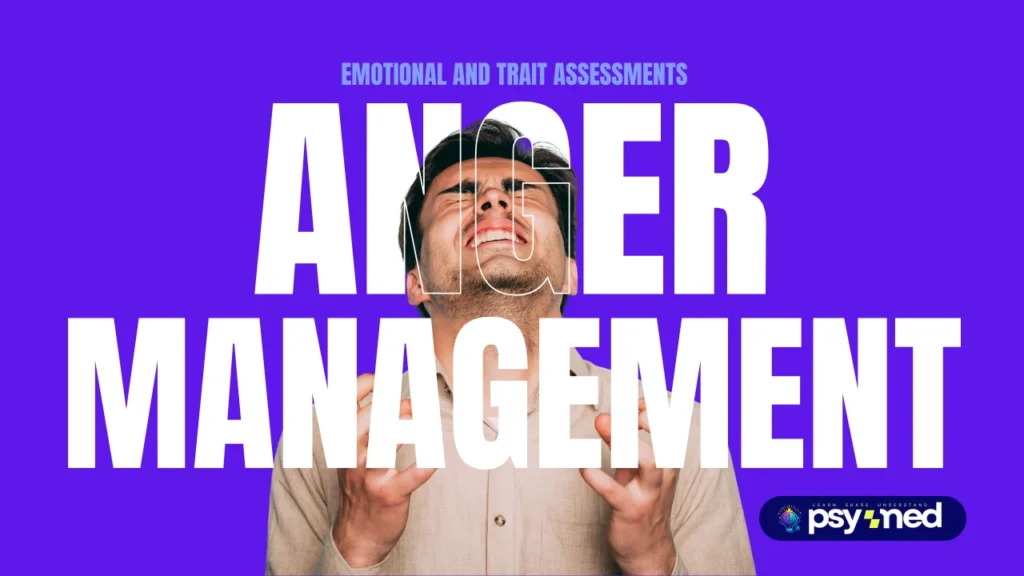
Anger Management Test: Is Your Anger a Problem?
Take the free anger management test to see whether your anger is becoming a problem, how well you manage it, and when to seek support. Private, instant results.
Published Updated
If anger ever turns toward harm, reach out now. This test is for understanding everyday anger, but if you’re worried you might hurt someone else — or yourself — during an episode, you don’t have to handle that alone. Call or text 988 (Suicide & Crisis Lifeline, 24/7) to talk it through. If your anger is becoming physical or frightening toward a partner or family member, the National Domestic Violence Hotline is available at 1-800-799-7233 (or text START to 88788). Reaching out is a sign of strength, not failure.
This free anger management test helps you see whether your anger has become a problem — how often it flares, how intense it gets, how well you’re able to manage and control it, and whether it’s affecting your relationships, work, or well-being. Grounded in established anger research (the STAXI framework) and the DSM-5-TR, it’s a private, instant self-assessment for reflection, not a diagnosis.
Anger itself is normal and healthy — a signal that something feels wrong or unfair. The question this test helps you answer isn’t “do I ever get angry?” but “has my anger started to cost me more than it’s worth, and could I manage it better?” If you’ve wondered whether your anger is getting out of hand, working through these questions is a constructive first step.
What Is Anger Management?
Anger management is the set of skills and strategies for recognizing, understanding, and regulating anger so it doesn’t cause disproportionate harm — not eliminating anger, which is neither possible nor healthy. Good anger management means you can feel anger fully and still choose how you respond, instead of the anger choosing for you.
When Does Anger Become a Problem?
Anger becomes a problem when its frequency, intensity, duration, or expression starts causing real damage — to your relationships, health, work, or peace of mind. It’s not about how angry you feel, but about the cost of how that anger shows up and how hard it is to rein in. Clinicians look at several thresholds:
Frequency
Anger that is activated several times per week or more by situations that would not typically produce strong anger in most people. Chronic, low-grade irritability that persists across situations and doesn’t resolve.
Intensity
Anger that reaches an intensity disproportionate to the triggering situation — strong enough to impair judgment, drive aggressive behavior, or produce significant physical symptoms (racing heart, muscle tension, tunnel vision).
Duration
Anger that doesn’t discharge naturally but lingers, replays, or extends into sustained resentment long after the triggering situation has passed.
Loss of control
Anger that produces behavior the person wouldn’t choose when calm — verbal aggression, property damage, physical aggression, or other actions driven by the emotional state rather than deliberate decision.
Functional impairment
Anger that is consistently causing damage to relationships, work performance, physical health, legal standing, or overall quality of life.
The DSM-5-TR includes anger as a central clinical feature in five diagnoses: Intermittent Explosive Disorder (IED), Oppositional Defiant Disorder, Disruptive Mood Dysregulation Disorder, Borderline Personality Disorder, and Bipolar Disorder. It is also a significant feature in PTSD, depression, and several personality disorders. The presence of significant anger problems doesn’t automatically indicate any of these diagnoses — but it does indicate something worth clinical attention.
Signs of an Anger Problem — What Problematic Anger Actually Looks Like
Problematic anger takes five recognizable forms — and most of them look nothing like shouting. It presents across a wide range of patterns, some loud, some quiet, some turned outward, some turned inward. As you read, notice which patterns feel familiar.
Explosive anger — the outburst pattern
The most recognized form: sudden, intense anger that erupts with a force disproportionate to the triggering event. The person may describe it as a “switch” flipping — going from calm to rage in seconds, feeling taken over by the emotion, and only fully processing what happened after the episode has passed. Explosive anger is the defining feature of Intermittent Explosive Disorder (IED), which affects an estimated 7.3% of adults over their lifetime. Our dedicated Intermittent Explosive Disorder Test is designed to screen specifically for this pattern.
Chronic irritability — the slow-burn pattern
A persistent, low-level state of frustration and irritability that isn’t triggered by specific events so much as it is the background condition. Small things provoke strong reactions. The threshold for annoyance is very low. Others describe the person as “always on edge” or “hard to be around.” This pattern is frequently associated with depression, chronic stress, anxiety disorders, and hormonal imbalances.
Suppressed anger — the turned-inward pattern
Anger that is felt but consistently not expressed — swallowed, denied, or redirected. This pattern often presents physically: headaches, jaw tension, chronic muscle pain, fatigue, or psychosomatic symptoms. Suppressed anger is associated with elevated cardiovascular risk, depression, and passive-aggressive behavior in relationships. People with this pattern often describe themselves as “not an angry person” — while those close to them notice the tension, withdrawal, and simmering resentment.
Rumination and resentment — the replaying pattern
Anger that doesn’t discharge but recycles — mentally replaying the triggering situation, rehearsing what should have been said, cataloging grievances, and carrying resentment that accumulates over time. This pattern significantly prolongs the physiological stress response and is associated with elevated cortisol, impaired sleep, and relationship deterioration.
Passive aggression — the indirect pattern
Anger expressed indirectly through avoidance, withdrawal, deliberate inefficiency, sarcasm, stonewalling, or behavior designed to frustrate others without direct confrontation. This pattern is often not recognized as anger by the person expressing it — and is sometimes experienced as a way of maintaining control without conflict.
Anger Management Test vs. Other Anger Tests
This anger management test focuses on whether your anger is a problem and how well you manage it. Other anger tests answer different questions — here’s how to choose:
| Feature | Anger Management Test (this page) | Multidimensional Anger Test | IED Test |
|---|---|---|---|
| Primary question | Is my anger a problem that needs to be addressed? | What is my anger style across 5 dimensions? | Do I have Intermittent Explosive Disorder? |
| Framework | Clinical anger assessment — STAXI-2 + DSM-5-TR | Spielberger STAXI model — 5 anger dimensions | DSM-5-TR IED diagnostic criteria |
| Best for | Someone worried their anger is hurting their life | Someone who wants to understand their anger pattern | Someone whose anger erupts explosively and disproportionately |
| Questions | 15 | 18 | 15 |
| Output | Severity level + specific action guidance | Anger style profile across 5 dimensions | IED symptom severity + clinical guidance |
What Causes Anger Problems?
Anger problems develop from an interaction of neurobiological, psychological, and environmental factors — not from a character flaw or moral failing. Like all significant emotional patterns, many of these factors were set in place long before the person had any conscious choice about them.
Neurobiological factors
Research consistently identifies amygdala hyperactivity as a central feature of anger disorders — the brain’s threat-detection center fires too quickly, too intensely, or in response to too-low-level threats. The prefrontal cortex — responsible for regulating impulses, evaluating proportionality, and making deliberate decisions — is less able to modulate the amygdala response in people with significant anger problems. This is not a choice; it is a neurological pattern that treatment can modify.
Serotonin dysregulation
Low serotonin availability has been consistently linked to impulsive aggression and reduced anger control across multiple research lines. This explains why SSRIs show some efficacy for anger-related conditions and why mood fluctuations (which involve serotonin) often correlate with anger threshold changes.
Adverse childhood experiences
Exposure to anger, violence, emotional dysregulation, or inconsistent caregiving in childhood shapes the developing nervous system’s threat response. Children who grew up in environments where anger was the dominant emotional currency often have anger as their primary emotional response — not because they chose it, but because it was modeled and reinforced as the default.
Trauma and PTSD
Anger is one of the most consistently reported PTSD symptoms, particularly in male presentations. The hypervigilance and heightened threat response of PTSD significantly lowers the anger threshold. Our PTSD Test is worth completing if trauma history is present alongside significant anger.
Co-occurring conditions
Anger problems frequently co-occur with depression (where irritability is a common but underrecognized symptom), anxiety disorders (where hypervigilance amplifies anger triggers), ADHD (where impulsivity and low frustration tolerance are core features), bipolar disorder (where anger is prominent in both manic and mixed episodes), and substance use disorders (which dramatically lower anger threshold and impair impulse control).
When to Seek Help for Anger Management
It’s worth seeking professional support for your anger when it’s regularly hurting your relationships, your work, or your health — or when your own efforts to manage it aren’t holding. Anger that leads to aggression, that you can’t seem to control despite trying, or that leaves you full of shame afterward is a clear signal, and reaching out is a strength, not a failure. A doctor or therapist (anger is very responsive to approaches like CBT) can help, and the resources at the top of this page are a good starting point. If your anger ever risks harm to you or someone else, treat that as urgent.
How This Anger Management Test Works
This test assesses problematic anger patterns across three clinical domains: anger frequency and threshold (how easily and how often anger is activated), anger expression and control (what happens when anger arises), and anger impact and impairment (what the anger pattern is costing you in daily life).
Answer based on your typical experience over the past month. Use the following scale:
Never = 0 | Rarely = 1 | Sometimes = 2 | Often = 3 | Always = 4
Total range: 0–60. This is a screening tool — it cannot diagnose an anger disorder. But a significant score reflects a pattern worth taking seriously and worth discussing with a mental health professional.
Understanding Your Anger Management Test Score
| Score Range | Category | What It Suggests |
|---|---|---|
| 0 – 15 | Low — Anger Well Within Normal Range | Responses suggest anger is not significantly problematic at this time. Normal emotional reactivity is present without significant impairment or loss of control. |
| 16 – 30 | Mild — Some Anger Management Challenges | Some anger management challenges are present. Anger may be affecting specific relationships or situations in ways worth addressing. Self-directed strategies and professional support can help. |
| 31 – 45 | Moderate — Significant Anger Pattern | A significant anger pattern is present across frequency, expression, and impact domains. Anger is likely affecting your relationships, work, or well-being in consistent ways. Professional support is strongly recommended. |
| 46 – 60 | High Anger Significantly Affects Your Life | Anger is significantly affecting multiple areas of your life. The pattern indicated here warrants professional evaluation and support. Effective treatment is available and works. |
Anger Management Techniques That Actually Work
The most effective anger management combines three evidence-based approaches that interrupt the anger cycle at different points: physiological de-escalation (the body’s state), cognitive reframing (the thoughts driving the anger), and behavioral change (what you do in response). No single technique does it alone.
Cognitive Behavioral Therapy (CBT) for anger
The gold standard. CBT targets the cognitive distortions that amplify anger — catastrophizing, mind-reading, black-and-white thinking, and the belief that anger is an appropriate or necessary response to specific triggers. It also addresses the behavioral patterns that maintain anger (aggression, avoidance, rumination) and replaces them with more effective responses. A 2022 randomized controlled trial by McCloskey et al. found that CBT significantly reduces anger frequency and intensity in adults with IED.
Dialectical Behavior Therapy (DBT)
Originally developed for borderline personality disorder, DBT has extensive evidence for emotion dysregulation broadly — including anger. The core DBT skills of distress tolerance and emotion regulation provide specific, practical tools for managing high-intensity emotional states, including TIPP (temperature, intense exercise, paced breathing, progressive muscle relaxation) for physiological de-escalation and DEAR MAN for interpersonal effectiveness in conflict.
Mindfulness and physiological regulation
Mindfulness-based approaches work on the awareness and acceptance dimension of anger — learning to observe the rising anger state without immediately acting from it, which creates the space between stimulus and response that makes choice possible. Combined with physiological regulation techniques (slow diaphragmatic breathing, progressive muscle relaxation), mindfulness approaches are accessible as self-directed tools at mild anger levels.
Medication where indicated
For anger patterns driven by an underlying condition (IED, bipolar disorder, PTSD, depression), medication targeting that condition often reduces anger as a secondary benefit. SSRIs have shown some independent efficacy for impulsive aggression, and mood stabilizers (lithium, valproate, carbamazepine) are used for anger in the context of mood disorders. Medication decisions should always be made with a prescribing doctor.
Frequently Asked Questions
What is an anger management test?
An anger management test is a self-report screening tool designed to assess whether anger is occurring at a frequency, intensity, or level of control that indicates a problem worth addressing. This test screens across three domains: anger threshold and frequency, expression and control, and functional impact. It uses criteria drawn from Spielberger’s STAXI-2 anger assessment model (1999) and DSM-5-TR frameworks for anger-related disorders. A significant score does not diagnose an anger disorder — it indicates a pattern worth exploring with a mental health professional.
What is the difference between normal anger and an anger problem?
Normal anger is proportionate to its trigger, resolves relatively quickly, doesn’t consistently damage relationships or functioning, and doesn’t involve loss of control over behavior. An anger problem exists when anger is activated too frequently, reaches intensity disproportionate to the situation, persists long after the triggering event, involves loss of behavioral control, or consistently causes harm to relationships, work, health, or legal standing. The key markers are disproportionality, lack of control, and functional impairment.
What is Intermittent Explosive Disorder and how is it different from an anger problem?
Intermittent Explosive Disorder (IED) is a specific DSM-5-TR diagnosis (312.34 / F63.81) characterized by recurrent, disproportionate explosive outbursts — either verbal aggression occurring twice weekly for three months, or three or more severe outbursts involving property damage or physical aggression within a year. IED is a specific clinical diagnosis within the broader category of anger problems. Not all anger problems are IED — many people have significant anger that doesn’t meet IED criteria but still warrants treatment. Our dedicated IED Test screens specifically for the explosive pattern.
Can anger issues be treated?
Yes — anger problems have an excellent evidence base for treatment. Cognitive Behavioral Therapy (CBT) is the most consistently supported approach, producing significant reductions in anger frequency and intensity. DBT skills training is particularly effective for emotion dysregulation involving anger. Medication can reduce anger threshold in some presentations, particularly where an underlying condition is driving the anger. Most people who receive appropriate, evidence-based treatment for anger problems achieve meaningful improvement. The earlier treatment is sought, the better the outcomes tend to be.
Is anger always about something external — or can it come from inside?
Both. Anger is triggered by external events — perceived threats, injustice, frustration, violation of expectations. But the threshold at which those events trigger anger, the intensity of the response, and the ability to regulate it are shaped by internal factors: baseline stress and arousal levels, sleep quality, physical health, co-occurring mental health conditions, neurobiological factors, and emotional history. This is why the same event can trigger strong anger on one day and nothing on another — and why addressing internal factors (sleep, stress, co-occurring conditions) is part of effective anger management.
Should I take this test or the Multidimensional Anger Test?
Take this Anger Management Test if your primary question is: “Is my anger a problem?” — if you’re concerned about the impact anger is having on your life, relationships, or sense of control. Take the Multidimensional Anger Test if your question is: “What is my anger style?” — if you want to understand how you experience, express, and regulate anger across five psychological dimensions. Many people find it useful to take both — this test tells you whether there’s a problem; the Multidimensional Anger Test tells you more about the specific pattern.
Further reading
Managing anger well is self-regulation, one of the five components of emotional intelligence. The EQ test places that skill alongside the other four, including self-awareness and empathy. A good deal of everyday anger is control frustrated: plans changed, or someone did it their own way. If that is the pattern you recognise, the control freak quiz looks at the need sitting underneath the irritation.
Related Tests
Anger problems rarely exist in isolation. These tests cover the conditions most commonly associated with problematic anger:
- Intermittent Explosive Disorder Test — the specific clinical screening for explosive, disproportionate anger outbursts; if your anger erupts suddenly and intensely, take this
- Want a deeper look at your specific anger style across multiple dimensions — how you feel, express, and control it? Try our Multidimensional Anger Test.
- PTSD Test — anger is one of the most common PTSD symptoms; important to assess when trauma history is present
- Bipolar Test — anger is prominent in both manic and mixed bipolar episodes; worth assessing when anger is episodic and accompanied by mood shifts
- Depression Test — irritability and anger are underrecognized symptoms of depression, particularly in men
- ADHD Test — low frustration tolerance and emotional dysregulation are core ADHD features that drive anger patterns
- BPD Test — intense, rapidly shifting anger is a hallmark feature of borderline personality disorder
For more impulse-control and emotional regulation screenings, visit our Addiction and Impulse Control collection.
References
-
-
-
- Spielberger, C.D. (1999). State-Trait Anger Expression Inventory-2 (STAXI-2): Professional Manual. Psychological Assessment Resources.
- American Psychiatric Association. (2022). Diagnostic and Statistical Manual of Mental Disorders, Fifth Edition, Text Revision (DSM-5-TR). Intermittent Explosive Disorder 312.34 (F63.81). psychiatry.org
- Kessler, R.C., et al. (2006). The prevalence and correlates of DSM-IV intermittent explosive disorder in the National Comorbidity Survey Replication. Archives of General Psychiatry, 63(6), 669–678. Harvard Medical School. PMID: 16754840
- McCloskey, M.S., et al. (2022). Cognitive behavioral therapy for intermittent explosive disorder: A randomized controlled trial. Journal of Consulting and Clinical Psychology, 90(2), 119–128. PMID: 34914451
- ScienceDirect. (2013). Anger across DSM-5 diagnoses: IED, ODD, DMDD, BPD, and Bipolar Disorder. sciencedirect.com
- Coccaro, E.F. (2012). Intermittent Explosive Disorder as a disorder of impulsive aggression for DSM-5. American Journal of Psychiatry, 169(6), 577–588. [Primary source on IED diagnostic criteria] pubmed.ncbi.nlm.nih.gov
- PMC. (2025). Comprehensive Review and Meta-Analysis of Psychological and Pharmacological Treatment for Intermittent Explosive Disorder. pmc.ncbi.nlm.nih.gov
- American Psychological Association. (2023). Strategies for Controlling Anger. apa.org
-
-
Related Tests
See All Quiz →

You may also like
See All Quiz →